Material risks and opportunities
Risk management arrangements
We manage our risks and opportunities to support the achievement of our strategic objectives by identifying opportunities
to protect, create and capture value. Our risk management arrangements align with the principles of King IV, ISO 31000:2018,
and generally accepted good practice in a manner that is fit-for-purpose. Ultimate accountability for the adequacy of the risk
management programme across Tiger Brands rests with the board. The board has assigned oversight responsibilities for risk
governance and the development of appropriate organisational and cultural maturity to the risk and sustainability committee.
The group executive committee, supported by category-level executive committees, is tasked with the design, implementation
and operation of the risk management system. Category-level management teams, supported by group operations,
continuously monitor and manage their risk profiles, and are responsible for developing and maintaining an appropriate risk-aware
culture.
Risk profiling and oversight
We adopt a comprehensive approach to identifying risks that
includes a top-down as well as bottom-up analysis. The
top-down approach starts with a group view of Tiger Brands,
where consideration is given to the operating environment, the
business model, and the associated objectives and strategies
defined by the group. Similarly, category leadership is required
to analyse their operating environments, business models,
products and strategies to identify category-specific risks;
these are also reported at the group level for oversight.
Common category-level risks are then identified, which may
be escalated and managed at the group level as needed.
In addition to identifying risks that impact our ability to achieve
our organisational objectives, management also considers
factors that may develop into risks, even in those instances
where our understanding of these factors is not sufficient
to develop comprehensive mitigating strategies. These are
termed 'emerging risks' and are also tracked through the
various oversight structures following a top-down and bottom-up
identification process.

We believe that effective risk management practices generate
additional benefits beyond the value protection outcomes typically
associated with risk remediation activities. As part of its risk
analysis process, management identifies and reviews
opportunities to create or enhance competitive advantage, and/or
increase our reputation, with a view to optimising value creation.
The group executive committee oversees the identification
of group risks and responses. Category-level management oversees and manages category-specific risks and reports the
material risks to the group executive committee through the
operational risk management committee. A consolidated Tiger
Brands risk profile is then compiled and reported to the board
risk and sustainability committee before being submitted to the
board. In addition to the analysis and remediation of top risks,
we maintain a combined assurance programme that aims
to provide stakeholders with comfort that the control measures
deployed to shape risks are adequate and effective.
Risk appetite and tolerance
General risk appetite and tolerance ranges are defined by group
executive management and annually approved by the board.
These ranges are reflected in the heat maps and provide
general guidance regarding expected responses to the mapped
risks.
For each risk, group executive management determines
a targeted residual risk level that represents risk-specific
appetite levels. These targets are set against the backdrop
of the approved risk appetite and tolerance ranges and more
specifically define the nature and extent of each risk's control
improvement plan. This target and the associated control
improvement plan is subject to management and non-executive
director oversight in accordance with Tiger Brands' risk
management policy.
While the group will accept risk to achieve its ambitions of being
a market-leading, international, diversified FMCG company,
Tiger Brands has an aversion to risk in the areas of food safety,
the delivery of quality products, and loss of life.
Our top risks
Our material risks are those that exceed our residual risk tolerance level and are
thus identified as having the most material implications for Tiger Brands and its
stakeholders.
The inherent risk heat map presented below represents the inherent risk profile
of our material risks. Without adequate remediation, the risks are potentially
a threat to the group as a going concern and thus merit management attention.
Following management's intervention through various remediation programmes
the material risk profile shows a marked improvement, albeit still in need
of further remediation. This is outlined below in our residual risk heat map.
The positioning of cost competitiveness does not appear to improve on the
back of implemented control processes. This reflects our cautious stance
on risk. Although we are confident in our response strategies, we monitor the
risk for evidence of control effectiveness before adjusting residual risk ratings,
a position that permeates across all our risks.
In addition to the risks listed below, we recognise that climate-related risks are
becoming increasingly significant, not only directly to our business model but
also at a broader economy-wide level. Given the growing materiality of this
issue, we are maturing our processes to identify, assess and remediate the
climate-related risks across our value chain.
The following table reviews the implications, mitigation measures, and year-on-year trend in the risk rating for each of our top risks.
Material risk
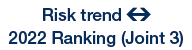
1.1 MARKET RESPONSIVENESS+
Responsiveness to an evolving trade
environment, blurring of channels and
trade concentration.

Context and value impact
Meeting and exceeding customer and
consumer needs and wants is the
lifeblood of our business.
With consumer spending remaining
depressed and competition high, this
challenge remains material and
threatens our market share, brand
strength, profitability and penetration
Mitigating actions
Our mitigation actions continue to
revolve around the following key themes:
- Collaborating with customers and
researchers to better understand
market needs and wants while
leveraging insights garnered by our
own consumer insights division
- Joint business planning with
customers to ensure we leverage
activity to mitigate adverse market
dynamics and respond
to consumer needs
- Ensuring that product and
customer mix are optimal
- Maximising service levels to ensure
product availability at locations
through joint forecasting with
customers
- Deploying promotions to meet
evolving shopper needs
- Price-pack tiering to ensure
affordability of our lines
- Creating differentiated value
proposition to ensure we create
value to shoppers through our
offerings
- Ongoing review of pricing
strategies to ensure
competitiveness
Strategic pillar:

1.2 COST COMPETITIVENESS+
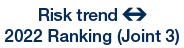
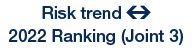
Decline in competitiveness due to higher input costs across the value chain, specifically in procurement, manufacturing, packaging and logistics and corporate costs.
Context and value impact
Our supply chain remains a
central component of our ability
to remain cost-competitive, and
also has a direct impact on our
climate-change aspirations.
The efficiency of our inbound and
outbound logistics, together with
heightened pressure on our
manufacturing capabilities
caused by electricity disruptions
(refer to 2.8 below), are dominant
drivers of this risk.
The physical and transition risks
of climate change are also
increasingly being felt across the
supply chain, resulting in cost
escalations and disruptions in
procurement and logistics.
Mitigating actions
Our initiatives are predominantly
focused on improving efficiency
and effectiveness in four areas:
- Prioritising the availability
of stock to ensure consistent
service levels
- Maximising the efficiency
of our logistics value chain
- Optimising our manufacturing
to reduce material usage
variances and improve overall
plant efficiency
- Enhancing management
forecasting, renegotiating
creditor terms and conditions,
and careful oversight
Strategic pillar:

2.1 PEOPLE SECURITY+
Failing to provide a secure work environment for employees, contractors and visitors.

Context and value impact
The security of our employees,
partners and visitors is of
cardinal importance to Tiger
Brands.
Threats to security may be
experienced on our premises, en
route to our premises, and
off-site (for example during the
delivery of product). Common
drivers of threats include criminal
elements intent on intimidation,
covering up of theft, labour
disputes and wage negotiations.
This risk is distinct from
occupational health and safety, a
separate risk that does not meet
the residual risk-level reporting
threshold.
Mitigating actions
Our measures aim to provide a
foundation of safety protocols to
guide appropriate behaviour,
reduce the likelihood of
occurrence and ensure effective
responses should the risk occur.
These include effective labour
and union engagement,
collaborating with law
enforcement agencies and
related parties, deploying
technology for rapid alert and
response action, security vetting
of employees and partners, and
effective disciplinary processes.
Strategic pillar:
2.2 PEOPLE SAFETY+
Failing to provide an adequately safe operating environment for employees partners and visitors.
Context and value impact
Manufacturing is an inherently
dangerous environment. This
risk is further elevated when
contractors, temporary staff and
visitors enter our premises. It is
within this context that we
continue to pursue zero harm,
which is founded on solid
occupational health and safety
compliance and due diligence
processes. Although we have
seen a marked improvement in
our OHS performance during
2023, there is still some room for improvement.
Mitigating actions
Tiger Brands' comprehensive
approach to OHS management
aims to prevent incidents of
injury and provide quality
incident response capability. Our
approach is risk-based and
supported by our combined
assurance programme to identify
and rectify areas of
improvement, which are unified
and expressed in a five-year
strategy.
Strategic pillar:
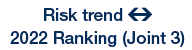
2.3 FOOD SAFETY+
Harm to the consumer caused either by food-borne illnesses relevant to our food products, or undesired skin/body reactions relevant to our personal and home care products.
Context and value impact
We have elected to split food
safety and product quality risks
to better manage the underlying
drivers. Food products have
inherent potential to lead to
health concerns for consumers
and thus remain at the forefront
of management's attention given
our strong risk-averse stance on
issues relating to public health
and safety.
Mitigating actions
The nature of food safety
demands that we approach it in
a scientific and systematic
manner to ensure consistent and
repeatable results. To this end,
we have implemented:
- Quality risk assessment and
management protocols
(including incident
management processes)
- Industry hygiene and quality
standards, including the
development and roll-out
of 60 new internal Tiger
Brands group quality and food
safety standards
- External certifications of all our
manufacturing facilities
- Positive release protocols
- Operational monitoring and
reporting processes
- Extensive ongoing employee
training programmes
A key improvement initiative
starting in FY23 has been the
roll-out of a technology-enabled
quality system to be phased in
over the next three years.
Strategic pillar:
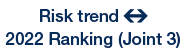
2.4 CYBER SECURITY+
Any risk of financial loss, disruption or damage to Tiger Brands' reputation due to failures of its information technology systems because of large-scale cyber security attacks.
Context and value impact
Increasing interconnectivity,
globalisation and commercialisation
of cyber crime are driving greater
frequency and severity of cyber
incidents, including data breaches.
This can compromise the
confidentiality, integrity and availability
of information and technology
resources, lead to disclosure of
commercially sensitive information,
intellectual property and/or disruption
to operations. In addition to
non-compliance risks, the release of
any personal information also has
negative reputational and brand
implications.
Mitigating actions
Our cyber-security measures aim
to mitigate key risks identified through
independent cyber assessments.
- We have purchased and are
implementing various core
capabilities
- We have added strong skill sets
to the team through vendor
partnerships to ensure we are
ready to respond to any cyber
incident
- We are building capacity to ensure
monthly reporting on our cyber-security
status; this is critical
in ensuring that identified gaps are
continuously addressed
Strategic pillar:

2.5 CONSUMER PREFERENCES+
Failure to understand and respond effectively to changing consumer demographics and spend, as well as consumption behaviour and patterns.
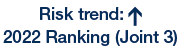
Deteriorating disposable income levels
driven by cyclical macro-challenges
is resulting in an increased year-on-year
ranking.
Context and value impact
Consumer preferences are dynamic,
requiring early signal detection and
rapid response. Our ability to respond
effectively to these changes is
influenced by the following:
- Failure to detect signals in a timely manner
- Factory constraints
- Third-party supplier constraints
- The nature of our supply chain dynamics
- Innovation process not fit-for-purpose
These factors accumulate and require a comprehensive and effective response in a timely manner to allow for differentiation in a very competitive market.
Mitigating actions
Our mitigation programme
is centred around the following key
activities:
- Internal and third-party market and
consumer research
- Factory design optimisation
(see also risk 1.2)
- Third-party supplier management
(see also risk 2.6)
- Consumer satisfaction monitoring
- Accelerating the quality, speed and
commercial value of our innovation
by the introduction of a new
process, which went live
on 1 October 2023
Strategic pillar:

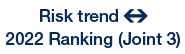
2.6 THIRD-PARTY
SUPPLIER RISKS+
Failing to adequately manage risks associated with outsourced manufacturing, and in-bound supply.
Context and value impact
Tiger Brands collaborates with
various supply chain partners to
deliver on its strategies. These
suppliers provide raw materials,
ingredients and packaging, and in
some instances finished goods, that
are subject to quality control
processes outside of our protocols.
Failure to ensure adherence to Tiger
Brands' specifications and standards
may erode consumer satisfaction,
profitability, and brand equity.
Mitigating actions
Relationships with these suppliers
and manufacturers are carefully
contracted to maintain Tiger Brands'
quality requirements and allow for
effective performance management.
All potential suppliers are put through
a rigorous assessment and on-boarding
programme to ensure they
are aligned with Tiger Brands'
commitment to quality and standards
throughout the product life cycle.
Beyond contractual compliance
management, we also implement
physical inspections upon delivery;
where appropriate, we obtain
certificates of analysis.
We also roll out our supply quality
assurance (SQA) audit programmes
to provide necessary assurances.
Consumer complaints are closely
monitored and investigated where
necessary.
Strategic pillar:
2.7 INDUSTRIAL ACTION+
Deteriorating labour relations and associated disruption to our value chain.
Context and value impact
Within a context of labour-dependent
manufacturing that is unionised, the
threat of industrial action remains
prevalent, especially during wage
negotiations.
Failure to contain industrial action
may lead to loss of sales, erosion of
profitability and market share.
Mitigating actions
- We are embedding an employee relations strategy geared towards creating labour stability and providing a great place to work
- We are delivering employee engagement and shop-floor development programmes
- We continuously review our remuneration policies and practices to ensure competitiveness and relevance
- Implementing a business continuity plan
Strategic pillar:

2.8 INSUFFICIENT ELECTRICITY SUPPLY+
Insufficient availability, or inadequate quality of supplied electricity.

Increasing instances of loadshedding
experienced.
Context and value impact
South Africa's electricity generation
capacity is increasingly under
pressure because of inadequate
capacity expansion.
The resultant loadshedding and
fluctuating quality of electricity supply
impacts adversely on our production
capability, costs (see 1.2), and our
environmental stewardship
aspirations.
Mitigating actions
- Our initiatives have focused
on generating electricity onsite
through mobile generator capacity
and renewable sources such
as solar. In addition, we actively
protect our equipment from
electricity surges that are linked
to loadshedding, and continue
to identify opportunities for energy
efficiency
Strategic pillar:
2.9 SECURITY OF FOOD SUPPLY+
Brand rationalisation due to adverse climatic conditions, deteriorating socio-economic norms, and evolving legal frameworks.

Climate-related impacts are increasingly
affecting our supply chain, putting at risk
the security of ongoing production
of food.
Context and value impact
Our global supply chain is increasingly
impacted by climatic conditions that
impact not only the location,
availability, accessibility, and price of
our raw materials, but also
downstream factors such as logistics
and regional legal requirements.
Mitigating actions
Our mitigation response targets the following:
- Ongoing identification of alternative source markets for raw materials, and/or researching the use of substitutes for raw materials
- Reformulating products to use more readily available, accessible, and price-viable ingredients, and/or optimise our manufacturing processes to accommodate reformulated products
- Stockpiling of raw materials to protect against shortages, inaccessibility or price volatility
- Application of technology or alternative processes to improve production of raw material or substitutes, and enhance forecasting of key aspects such as planting dates and precipitation patterns
- Enterprise development initiatives develop and promote sustainable farming of desired raw materials
Strategic pillar:
Climate change: a particular risk type

We do not classify climate change as a single risk. In our minds, it is too wide
a risk definition to effectively respond to all its drivers and consequences
in a single mitigating strategy.
Consequently, we refer to climate change as a “risk type” to ensure that
it receives due consideration when emerging and active risks are identified
across our value chain.
Our drive to identify and respond to specific climate-related risks is gaining momentum. This year,
we have taken some pragmatic steps to identify and assess specific climate-related risks, including
engaging with internal and external specialists. For example, we have engaged a water specialist
to undertake an assessment of water security risks across our value chain, and we have had internal
discussions with our agricultural commodity managers to explore the security of food supply
as a specific concern.
Climate-related risks are identified, managed and reported on through the established Tiger Brands risk
methodology and structures to ensure that it is not a stand-alone consideration but fully integrated with
our business oversight and management practices.
The table below provides a generalised overview of the climate-related risks, opportunities and impacts of greatest
significance for our business.
| Risks |
| Supply chain disruptions |
Extreme weather events and climate change, aggravated by local water scarcity and energy instability, could lead to significant disruptions in the supply of commodities and raw materials, and the distribution of products. |
| Regulatory and legal risks |
New legislative requirements, including new taxes and stricter regulation on environment and health, present legal and compliance risks. |
| Reputational risk |
Failure to address economic transformation, public health, food security and climate change issues could damage Tiger Brands’ reputation and market share, especially with rising social and shareholder activism. |
| Opportunities |
| Resource efficiency |
By implementing water-efficient processes, energy-saving technologies and renewable energy sources, we can help mitigate resource scarcity, lower costs, and reduce environmental impact ( see sustainability report). |
| Sustainable and resilient supply chains |
By developing more local, diversified, sustainable, and resilient supply chains, we can support local
economies, reduce vulnerability to geopolitical or climate-induced disruptions, and strengthen our ability
to partner with suppliers to address social and environmental impacts and risks in the supply chain (see
sustainability report). |
| Waste reduction and circular economy initiatives |
Reducing packaging waste and food waste, as well as developing innovative new packaging solutions, service
models, and circular material flows, offers the potential to reduce costs and to develop new income streams and
business models that reduce resource consumption and environmental impact, and that support enterprise
development initiatives that address social inequality and economic exclusion (see
sustainability report). |
| Impacts |
| Greenhouse gas (GHG) emissions |
GHG emissions from our direct operations and manufacturing plants, purchased electricity, upstream manufacturing
and agriculture (land conversion) and manufacturing, and downstream transport contribute to climate change.
Organic waste that we send to landfill contributes to climate change through the release of methane. |
| Resource use |
Water scarcity and energy security are acute issues in South Africa. We use energy and water in our
operations, and the efficiency and circularity of our use of these resources in our operations directly impact
the general availability of these resources for communities and ecosystems (water). Our use of borehole
water potentially impacts groundwater quality and availability. |