INTEGRATED ANNUAL REPORT 2023

For the year ended 30 September 2023
Our operating environment

Our ability to create value, and to deliver on our purpose, is significantly affected by the changing dynamics in our external operating environment.

We have identified five interconnected trends that are having a material impact on our business model and that have informed our strategic response:

1. An unsettled global and regional macro-economic environment
2. Profound socio-economic challenges in South Africa, impacting consumer confidence
3. Changing customer and consumer dynamics
4. The impact of digital technologies
5. The rising impact of ESG and sustainability-related considerations

Each of these trends brings challenges and opportunities, highlighting the critical importance of having the right skills, operating processes, leadership and culture to ensure Tiger Brands' continued growth.

1. AN UNSETTLED GLOBAL AND REGIONAL MACRO-ECONOMIC ENVIRONMENT
  • The global economy has had a challenging year. Initial signs of a post-COVID-19 recovery are in danger of being reversed, with global trade under pressure in the face of continuing geopolitical instability, weakening global demand, and tighter monetary and fiscal policies in response to stubborn inflation
  • Commodity prices and foreign exchange markets have been volatile, while fuel prices have increased, driven by rising global oil prices off the back of slow demand and decreased output. This has been exacerbated by the increasing incidence of extreme weather-related events impacting global supply chains
  • The outlook remains uncertain, with sluggish growth anticipated amid growing concerns around the fragility of the Chinese economy. The country's post-pandemic recovery has been slower than expected, with lower global demand putting deflationary pressure on the world's second-largest economy, which is also facing a potential property bubble
  • Our markets across Africa face their own macro-economic challenges, characterised by growing youth unemployment, accelerating food inflation, high levels of income disparity and continuing political instability. Regionally, the political landscape is clouded in many countries by mismanagement, corruption, political intolerance and popular protests, with post-election violence increasingly a feature in many electoral cycles
Our strategic response
  • In the context of a subdued economic outlook – and given our exposure as a premium-priced brand in staple products – we have strengthened our focus on driving operational efficiencies and delivering a step-change in our innovation practices and in the nature of our customer and consumer engagement
  • Three years ago, we introduced a more systematic approach to driving a culture of cost-saving and efficiencies across the business, changing the governance structures, improving accountabilities, and strengthening our central revenue management capability within each of our business units. This year, we maintained our focus on this efficiency drive, delivering R525 million in savings over the year
  • To improve productivity and secure long-term cost-savings across our supply chain, we have made further investments in improving our manufacturing operations – expanding capacity, optimising efficiency, replacing ageing equipment, upgrading infrastructure and realising innovation opportunities
  • In response to the increasingly challenging geopolitical landscape and growing supply chain vulnerabilities, we have further strengthened our centralised procurement capabilities and shifted our focus towards mitigating supplier risk, ensuring seamless supply chain continuity and managing inflationary pressures
2. PROFOUND SOCIO-ECONOMIC CHALLENGES IN SOUTH AFRICA IMPACTING CONSUMER CONFIDENCE
  • South Africa's economic prospects continue to be constrained by record-high levels of unemployment and loadshedding, significant infrastructure bottlenecks, persistent crime and corruption and dysfunctional local municipalities. The country has among the world's highest rates of inequality and unemployment, which is constraining economic activity and feeding growing youth alienation and heightened potential for social unrest amid broader frustration with poor levels of service delivery and weak political leadership. The business sector is faced with significant policy and regulatory uncertainty in the run-up to next year's election that may result in a new coalition government
  • Over the past 10 years, the value of the rand has depreciated 86% against the US dollar, significantly increasing the cost of imported goods, and contributing to the country's inflation rate, which has been above 4% on average for the past five years
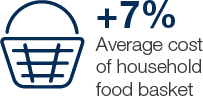
  • This year, consumer confidence plummeted to its second-lowest level since 1994, reflecting consumers' concerns with the country's economic prospects and the sustained pressure on disposable income due to high interest rates and debt levels, and soaring fuel and food prices. While food price inflation has been easing recently in much of the rest of the world, South Africa's consumer food inflation has continued to accelerate this year, reaching 7% for the year ended September 2023
  • We are now operating in an environment where the anticipated emerging middle class is submerging under sustained waves of economic challenges, with brand loyalty under pressure across the food and FMCG sectors. Consumers are trading down, reducing demand for discretionary and premium products, switching to cheaper value offerings, and showing a heightened reliance on promotional pricing and growing shift to private label, with brand-loyal customers reverting to smaller pack sizes. With heightened price competition, volumes and margins are threatened, and cost recovery ahead of inflation remains a challenge
  • The outlook is not encouraging, with a tougher trading environment anticipated due to the flat economy, downward pressure on our currency, continuing high rates of unemployment and indebtedness, and ongoing electricity supply constraints, on top of local political uncertainty and the potential for social unrest
Our strategic response
  • Meeting the needs of the value-seeking consumer is a critical basis for fuelling Tiger Brand's growth objectives. In responding to the affordability imperative, we have been enhancing the affordability and accessibility of our existing and new product offerings through appropriate pack, price and channel architecture, realising opportunities for product and packaging innovation, and harnessing effective distribution channels, supported by value marketing and consumer engagement campaigns to highlight the value benefits of our current brands. We are continuing to rationalise our brand and product portfolio, seeking to preserve margins by focusing resources on our best-performing lines
  • As reviewed in more detail in our response to the increasingly competitive retail sector and shifting consumer dynamics, we are actively expanding our reach in general trade, and we have refreshed our strategy to best defend our product offerings against the increasing threat of private labels
  • In seeking to alleviate some of the underlying socio-economic challenges facing South Africa, we are continuing in our efforts to boost economic opportunities and improve the livelihoods of thousands of people across our value chain through a deliberate focus on supporting black/black-women farmers and owned enterprises as part of our enterprise and supplier development activities, and our preferential procurement practices
HOUSEHOLD AFFORDABILITY INDEX – LOW-INCOME HOUSEHOLD

Source: Econometrix, PPEJDG, Deloitte

3. AN INCREASINGLY COMPETITIVE MARKET RESPONDING TO SHIFTING CONSUMER DYNAMICS
  • In response to challenging market conditions – as well as drivers such as increasing digitisation, growing urbanisation, busier lifestyles and changing aspirations relating to healthier eating and ethical sourcing – consumers are changing their purchasing patterns. They are typically shopping less frequently, across fewer categories, and at fewer retailers, for bigger baskets, with growth biased towards essential categories, while demanding more in terms of affordability, convenience and quality
  • Responding effectively to these changing consumer dynamics has intensified competition across the sector, with food retailers and wholesalers looking to defend and grow market share by being more precise and deliberate in their consumer engagement strategies. Retailers are strengthening their analysis of shopper behaviour and leveraging basket data to segment stores to satisfy specific shoppers through targeted ranging, pricing and promotions
  • At the same time, we are seeing fundamental shifts in our route-to-market, with supermarkets facing strong competition from mixed and wholesale retailers, emerging informal players, and convenience retail solutions such as forecourts and e-commerce. Informal independent traders, such as spaza shops and superettes, contribute roughly 26% of the FMCG market in South Africa, and have faster growth rates than the modern market. There has also been a continued rise in e-commerce, with online retail sales doubling in the country in roughly two years. These developments are requiring us to revise our channel strategies and further strengthen customer engagement and service levels
  • We are continuing to see aggressive competitor pricing, as well as increasing sophistication in private-label penetration, both of which are placing pressure on branded product volumes and margins
  • As convenience and value have become key drivers of consumer choice, and informal players capture consumers closer to home, a shift to smaller pack sizes has enabled market expansion and affordable price points
Our strategic response
  • To capitalise on emerging consumer trends, we are creating a more streamlined two-track innovation process that balances the benefits of agility with more traditional linear product development. This will ensure continued renovation of core products, while encouraging experimentation with higher-risk, high-reward innovations to meet emerging consumer preferences where speed-to-market is more important. We have prioritised three growth platforms for innovation: driving affordability to meet the needs of value-seeking consumers; democratising health and nutrition; and owning relevant demand spaces in key snacking categories. In doing so, we are placing a strengthened focus on reducing artificial ingredients and leveraging natural and home-grown credentials to differentiate on authenticity and health
  • To ensure more effective penetration in a challenging market, we have prioritised the execution of shopper-centric segmentation of our trade channels. Deepening our insight of broad shopper profiles is informing our shopper activation and store execution plans, enhancing our consumer marketing campaigns, and ensuring more targeted pricing, promotions, and price and pack architecture
  • In response to the growing importance of the informal market, we are pursuing various initiatives to expand our reach in general trade. Following an aggressive roll-out plan, we have reached 50 000 general trade stores this year and aim to expand our presence to 130 000 stores over the next five years
  • We have refreshed our strategy to best defend our product offerings against the increasing threat of private labels by further investing in our brands, building our innovation capabilities, and offering consumers choice through our premium and value offerings
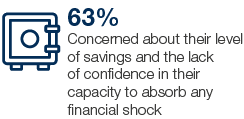
CONSUMER STATE OF MIND
Financial state of mind

Cost-saving behaviours

4. DIGITAL TECHNOLOGIES AND E-COMMERCE
  • Growing levels of digitalisation, and the rapid rise of artificial intelligence, big data and data analytics are transforming business models across all sectors, presenting profound opportunities and significant risks. Digitally savvy consumers increasingly expect their shopping experience to be as frictionless as possible and now have a strengthened ability to mobilise market sentiment. Similarly, the increase in digitally based hybrid work has fundamentally reshaped the office experience and become an important feature in attracting and retaining talent
  • Digital tools and technologies are generating significant efficiencies, allowing companies to rapidly identify and adapt to changing consumer preferences, and providing exciting opportunities for business innovation. Seizing these opportunities effectively, and staying ahead of competitors, requires new talent, skills and work patterns, as well as the ability to manage heightened cyber security risks
  • In South Africa, we have seen significant growth in Bricks and Clicks grocery e-tailers (such as Checkers' Sixty60 and Pick n Pay's ASAP), as well as more non-grocery platforms starting to drive groceries on their platform (such as Mr D). There has been continued uptake of Pure Play e-commerce initiatives – in the form of e-tailers (such as Takealot) and super apps (such as Nedbank Avo), with the online retail giant Amazon expected to launch in the country soon – as well as increasing growth in direct-to-consumer initiatives
Our strategic response
  • We have continued to drive various initiatives to raise our online presence and become the preferred supplier to prioritised digital e-commerce partners. We have made further progress this year in each of the targeted focus areas: delivering focused category/brand activity with leading grocery e-tailers; enhancing our online presence through joint strategic initiatives with platforms such as Takealot; scaling up our pilot online shop (Tiger Trolley) as a test case direct-to-consumer platform; and strengthening our social e-commerce strategy
  • Last year, the Tiger Brands board approved a new digital strategy that provides a comprehensive framework and roadmap to leverage digital technologies to improve productivity, drive growth and enhance the experience of our customers, consumers, service partners and employees. This year, our primary focus has been ensuring effective execution of our prioritised digitisation initiatives in three areas: food safety and quality; digitising the freight desk for both import and export goods; and uplifting our procurement capabilities. During the year, we have also deepened the operational proficiency of our cyber risk management processes. We have completed our digital prioritisation process for next year, identifying various specific programmes for in-depth investigation, including specifically in customer and marketing analytics, our people strategy, and order and returns management
5. THE RISING IMPACT OF ESG AND SUSTAINABILITY-RELATED CONSIDERATIONS
  • Interconnected social and environmental pressures are having a more visible direct impact on markets and businesses, globally and locally. The increased frequency and severity of extreme weather events, floods, droughts and wildfires – seen this year across the world – has highlighted the risks for the availability, quality and pricing of essential raw materials, for the resilience of distribution and supply chains, and for the robustness of manufacturing and productivity. Similarly, the recent civil unrest in South Africa has arguably sharpened business and investor appreciation of the commercial impacts associated with persistent inequality, poverty and joblessness
  • The growing visibility of social and environmental pressures is prompting greater regulatory intervention – including for example new and/or strengthened regulation on sodium reduction, extended producer responsibility, food labelling, marketing to children, and taxes on sugar and carbon – all of which has a material impact on our business activities
  • A failure to demonstrate effective response measures on issues such as economic transformation, public health, food security and climate change can damage a company's reputation, market share and ability to attract talent, particularly in the context of rising social and shareholder activism
  • Many middle and high-income consumers are now looking behind the brand to assess whether the operating practices and impacts of food producers are aligned with their values, showing an increasing willingness to trade off on price in favour of health and sustainability priorities. In some market segments, we are seeing growing demand for brands-with-purpose, sustainable and local products, plant-based proteins, ethical marketing, and front-of-pack nutrition labels. Globally, there is an increasing preference for local ingredients, given these products are often perceived as healthier and more sustainable, trustworthy and authentic
  • Within this context, there has been a marked increase in investor engagement on companies' environmental, social and governance (ESG) performance and disclosure amid significant changes in global reporting standards and frameworks. The publication this year of the first set of IFRS Sustainability Disclosure Standards, the European Sustainability Reporting Standards (ESRS), and the recommendations of the Task Force on Nature-related Financial Disclosures (TNFD) signals a material shift in global sustainability reporting
Our strategic response
  • As one of the largest food companies in South Africa and across the continent, we recognise that we have a substantial role to play in facilitating access to affordable nutrition, shaping employment, enterprise development, and skills development opportunities, respecting human rights, entrenching fair labour and remuneration practices, and promoting responsible environmental practices within our operations and across our supply chain
  • Our forward-looking approach to addressing our sustainability impacts is reflected in our sustainable future strategy. This strategy comprises three focus areas – health and nutrition, enhanced livelihoods and environmental stewardship – underpinned by a set of strategic enablers aimed at building a strong foundation for responsible business practice
  • We have made further progress this year on our commitment to empower consumers to improve their health and wellbeing by launching various food products that are more nutritious and affordable, developing best-in-class nutritional standards, and leveraging our brand and marketing activities to promote consumer nutrition. We have continued to invest in strengthening product quality and food safety across the company to ensure that we have robust systems, qualified people, and a strong quality and safety culture, achieving external certification for all our manufacturing facilities against globally recognised food safety standards
  • We are continuing in our efforts to improve the livelihoods of thousands of people across our value chain, using our procurement practices and our investment in supplier and enterprise development to stimulate economic opportunities, including through a specific focus on supporting black/black-women farmers and owned enterprises
  • We have also made further progress in reducing our environmental impact through various initiatives, including investments in renewable energy, optimising energy and water consumption in our operations, and minimising waste, effluent, and emissions. We are continuing to explore innovative opportunities for circular economy interventions in areas such as packaging and food waste, as well as leveraging our brand and marketing activities to inspire positive behaviour change