

Robust food safety and quality system
Millions of people rely on Tiger Brands products for their daily nutritional needs. Quality and consumer safety is also relevant in our Home and Personal Care (HPC) portfolio of products. For this reason, product safety and quality, as a company value, is a non-negotiable aspect of our business, positioned at the very heart of our success.
Our centralised food safety and quality system, embedded at group level, provides the direction and support needed to empower each Tiger Brands employee to take personal responsibility for food safety and quality, particularly at the operations level. The execution of this standardised and central approach, rests with the chief supply chain officer, supported by the quality director. He reports to the chief supply officer and also to the board through the risk and sustainability committee.
Our 2022 Quality Strategy outlines short, medium and long-term priorities that drive improvements in our end-to-end (e2e) management of food safety and quality across functions. We aim toward a fully-integrated system, where robust and contemporary processes, continuously updated, are supported by talented and well-trained people who work with inspiration in a culture of quality excellence.

We hold ourselves, our suppliers and third-party manufacturing partners, to the same stringent standards through ongoing risk assessment, gap closures and certification. This year, we made the following progress at our sites:
- All our manufacturing sites conducted quarterly self-assessments against the Global Food Safety Initiative (GFSI) protocol, as well as self-assessments against Tiger Brands' quality standards.
- All our manufacturing facilities were audited by DQS, an international certification body, and maintained certifications against the globally-recognised Food Safety System Certification (FSSC 22000) or Hazard Analysis and Critical Control Points (HACCP) System. Most of our sites are certified against FSSC 22000, but we still have a few certified under HACCP.
- All our warehouse facilities were audited by DNV, an international certification body, to completing gap audits against the Brand Reputation through Compliance (BRCGS) Global Standard for Storage and Distribution in preparation for certification in FY21.
- Our HPC site progressed against the HPC 420 Protocol, with certification expected in FY21 with audit conducted by DNV. HPC 420 is a certification scheme that aims to ensure the safety and quality of HPC Products.
- The Central Micro Laboratory progressed against the ISO 17025 standard, with certification from SANAS expected in FY21.
- A risk assessment project focusing on HACCP has been initiated with the assistance of an industry expert.
- Tiger Brands joined the European Hygiene Engineering and Design Group (EHEDG) and will use their guidelines as the manufacturing hygiene standards across our operations. A virtual training was held with our technical areas to initiate this process.
Tiger Brands will continue to raise the bar during FY21 under guidance of our strategy. Assessments throughout the distribution chain will continue, with the inclusion of the return-centres and trans-shipment warehouses that start their certification cycle with gap audits aiming at certification in FY22. Our targets for the next three years are in the table below.
| Indicator | ||||||
| Quality | FY21 | FY22 | FY23 | |||
| Public recall | Zero | Zero | Zero | |||
| Reduction in market place incidents (%) | (30) | (20) | (20) | |||
| Reduction in complaints (%) | (12) | (12) | (12) | |||
More about the safety standards applicable to our operations can be found at https://www.tigerbrands.com/sustainability/reporting.

Covid-19 response: Food safety and quality
In response to the Covid-19 pandemic, and to ensure product safety, the quality team developed and implemented Covid-19 response protocols, which included:
- A decision-tree that takes into account product shelf-life
- A decontamination plan which provides guidance on the types of fogging required, including the appropriate chemicals for different production environments and the sourcing of competent service-providers and facemasks for factory personnel
- A high-level of response-readiness maintained by our site quality teams ensures a quick response to positive case detection
Partnership with the Centre for Food Safety at Stellenbosch University
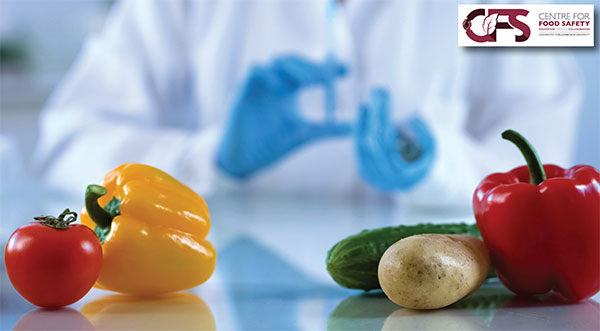
Launched in November 2018, the Centre for Food Safety is a unique applied food science research consortium, comprising Stellenbosch University researchers working together with the food industry and other stakeholders on real-world food safety challenges.
Launched in partnership with Tiger Brands, the centre focuses the role of collaboration as an enabler of successful innovation. The centre works together with external partners to build and share knowledge, experience and expertise in food safety, food defence and food processing. The activities of the centre focus on three pillars: scientific research and training in all aspects of food safety, consumer engagement and awareness, and food safety policy. The strategic objectives of the centre are towards high-quality science, responding to emerging risks and opportunities and generating outputs that matter.
Since its launch, the centre has collaborated with Tiger Brands on various projects aimed at providing trusted, independent, timely and credible food safety advice, and translating research findings into constructive policy-options for the company.
One of the centre's key goals is to educate and raise awareness in support of building a food safe culture in South Africa. This year, the centre saw publication of six international scientific papers, and the graduation of one doctoral and six masters students. Yet, with classrooms closed and conferences cancelled due to Covid-19, public engagement around these research activities has been severely limited. Key events hosted early in the year included a series of lectures given by the centre's international advisory board members and a four-day food safety awareness workshop held with 100 participants from academia and the food and hygiene industries.
The current research activities of the centre span a wide range of topics, including:
|
 |
Update on the listeriosis outbreak, food safety and the Class Action lawsuit
The 2018 listeriosis outbreak was a tragic event in South Africa. We cannot overstate the significant and far-reaching consequences of the listeriosis crisis, particularly on the victims of the outbreak and their families. A Class Action lawsuit has been certified against the company for its alleged role in the outbreak. Tiger Brands remains committed to participating fully in the legal process which will determine whether the company is liable for the outbreak. We will continue to follow due process to ensure that the Class Action is resolved expeditiously and fairly within the confines of the legal process, and that a conclusion is reached in the shortest possible time in the interest of all parties, particularly the victims of listeriosis.
Participating in the legal process
On 3 December 2018 the High Court granted an order permitting a Class Action lawsuit to be brought against Tiger Brands by Richard Spoor Attorneys on behalf of classes of listeriosis claimants.
In the interest of reaching an outcome for all affected parties as soon as possible and given the lengthy timeframe Class Action processes can take, we supported the certification of the Class Action and contributed R1 million to support a nationwide media campaign to reach as many potential claimants as possible. This was done to ensure that the process is not unnecessarily delayed. Subsequently summons was issued and a plea was filed setting out the company's defence.
Furthermore, in recognition of the significant public interest surrounding the Class Action, we proactively conducted a series of briefings between senior members of the media and the lawyers retained by the insurer to represent Tiger Brands. The intention of these interviews was to promote understanding of the complex legal process.
Following application to the Gauteng Local Division of the High Court, Johannesburg by various third parties contesting subpoenas issued by Tiger Brands requesting disclosure of information related to the testing for and incidence of listeriosis, in June 2020, the High Court ruled in favour of Tiger Brands, compelling the National Institute for Communicable Diseases (NICD), the South African Bureau of Standards (SABS), two accredited national laboratories and various meat producers to provide critical epidemiological information required for the listeriosis Class Action lawsuit. All of the third parties (with the exception of the SABS) applied for leave to appeal the Court order. On 15 September 2020 the High Court granted the third parties leave to appeal to the Supreme Court of Appeal (SCA). Consequently, no epidemiological information has been provided to Tiger Brands to date. It is expected that the SCA will likely hear the appeal during the course of 2021.
In August 2020, Richard Spoor Attorneys shared with the media that they had filed a High Court application to compel Tiger Brands to discover and provide information pertaining to food safety management documentation relating to the Enterprise Polokwane factory. Tiger Brands opposed the application on the basis that it was premature owing to the extensive review of documentation and electronic records spanning over one (1) terabyte (TB) that had to be undertaken to enable a proper discovery process. Legal representatives of the parties agreed to work together and cooperate in the discovery process following directions given by the presiding judge in the matter. As the Class Action litigation process progresses, we remain committed to participating in the process expeditiously, and will continue to conduct ourselves in a manner that upholds our values, respects due legal process and abides by the decisions of the Courts.
For more information and updates on the Class Action, please refer to our website: https://www.tigerbrands.com/sustainability/commitmentfoodsafety/classactionupdate
Sale of our VAMP businesses
In November 2019, Tiger Brands announced our intention to sell our Value Added Meat Products (VAMP) business. Initially earmarked for strategic review in 2017, the VAMP business was considered not an ideal fit for our portfolio, and the board resolved in 2018 that it was in the best long-term interests of the company to divest from this part of our business. Early in November 2020 the company concluded the sale of the VAMP business to two separate bidders.
Our abattoir business at Olifantsfontein has been acquired by Molare Proprietary Limited, effective from 28 September 2020. Molare is one of South Africa’s largest piggery businesses and was previously one of our main suppliers. The company’s three meat processing businesses at Germiston, Polokwane and Pretoria were acquired by Silver Blade Abattoir (Pty) Ltd, a wholly owned subsidiary of Country Bird Holdings (Pty) Ltd (which transaction became unconditional on 2 November 2020 following receipt of regulatory approvals of the transaction by the South African and Namibian Competition Authorities).
Further advancing food safety and providing assurance of meat processing
To certify our food safety efforts, all our manufacturing facilities are audited annually by an international certification body against the globally-recognised Food Safety System Certification (FSSC 22000) or Hazard Analysis and Critical Control Points (HACCP) System. Enterprise Foods further adheres to Pork 360, the South African Pork Producers' Organisation (SAPPO) Farm Assured Accreditation Scheme. We remain fully certified by these bodies, and this year have joined European Hygiene Engineering and Design Group (EHEDG) to advance the hygiene standards across our facilities against these guidelines.
To show our commitment to strengthening food safety across South Africa, and to build a vehicle to solve shared food safety challenges, we partnered with Stellenbosch University in 2018 to launch the Centre for Food Safety. We continue to support the Centre for Food Safety and collaborate on applied food safety research. To improve communication between Tiger Brands and customers, we have improved our engagement with stakeholders through our online channels.
For more information on our food safety and quality system and updates this year, see above.
- To support people displaced through the Anglophone crisis, Chococam is providing cleaning equipment and food to refugee camps.
- To improve access to potable water in the community surrounding their operations, Chococam has set up a free water delivery system alongside their factory.
- To advance hygiene during the Covid-19 crisis, Chococam has strengthened the practice of handwashing in the local community. At local administrations and schools, Chococam has donated handwashing stations upcycled from their facility's used steel drums, renovated water infrastructure and facilities, and ran a hygiene campaign.
- To take the lead in promoting food health and nutrition in Cameroon, Chococam is providing financial assistance to the Quality and Norms Agency to establish national food nutrition standards.
- To ensure a robust foundation in food safety and quality, the factory has retained their ISO 9001/2015 certification.
- To promote environmental stewardship, Chococam recycles all paper at their facilities and has reduced their plastic packaging waste by 31% from 2019.
Steel drums of raw material have been recycled into hand washing systems and offered to administrations and schools.

The paper generated from our office activity is recycled, through a contractor, into egg trays.