OUR OPERATING ENVIRONMENT
We are operating in a macro-economic context that is increasingly "brittle,
anxious, non-linear and incomprehensible" (BANI), requiring heightened
agility and proactive management.
Our ability to create value as a business and to deliver on our purpose is affected by the increasingly volatile dynamics in
our external operating environment, globally, nationally and regionally.
This year, we have prioritised the following four interconnected trends that are having a material impact on our business
model and that continue to inform our strategic response:

Each of these trends brings specific challenges and opportunities to the business, highlighting the critical importance of
having the right skills, operating processes, strategy and culture to ensure Tiger Brands' continued resilience and growth.
1
SUTAINED PRESSURE ON CONSUMER INCOME AND FOOD SECURITY
The South African consumer remains under significant pressure, both in terms of
disposable income and food security. Median household income is lower than the
average cost of a nutritious basket of food and the child support grant is less
than the average cost to feed a child. This highlights the imperative of
delivering affordable, quality nutrition.
Economic strain heightens price sensitivity, with affordability and accessibility key drivers
- The South African consumer continues to experience
significant pressure on disposable income in the context
of high unemployment levels, declining inflation-adjusted
wages and increasing loan repayments. A sizeable share
of the population lives below the poverty line: the official
unemployment rate remains high at 33.2%1, while 40.1%
of South Africans depend on a monthly social grant, up
from 12.8% in 20032
- This pressure on consumers is exacerbated by South
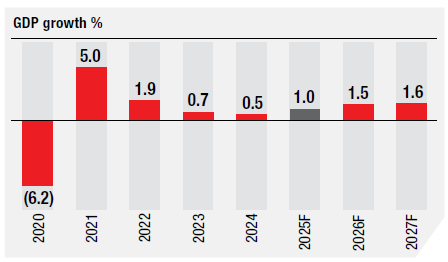
Africa's sluggish economic growth rate (expected to be
around 0.9% to 1.6% for the full year 2025), as well as
rising debt-servicing costs that are projected to reach
5.2% of GDP in 2025, exacerbating household financial
pressure3
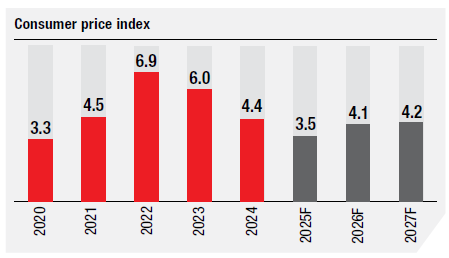
- In September 2025, South Africa's inflation rate was
3.4% year on year, the second consecutive monthly
increase and the highest rate in ten months. A key driver
behind this increase were food and non-alcoholic
beverages (reaching 4.5% year on year in September),
with essential food groups such as fruits, nuts, meat,
vegetables and oils and fats contributing to the increased
inflation rate4
- Given that food and non-alcoholic beverages constitute
around half of the poorest households' expenses, rising
food prices have a disproportionate impact on these
households, significantly impacting food security and
nutritional intake, with many families either purchasing
less food or buying cheaper food with reduced nutritional
value (see strategic response)
- In this context of reduced disposable income and low
wage growth, consumers are typically shopping less
frequently, across fewer categories and at fewer retailers
for bigger baskets. Many consumers are switching to
cheaper value offerings, with around 36.4% of the food
basket in South African retailers being shopped on
promotion, with some categories as high as 50%5. There
is also continued uptake of private label, with brand-loyal
customers reverting to smaller pack sizes
- In the face of heightened price competition, volumes
and margins are threatened, with cost recovery ahead
of inflation a key strategic priority. With tighter budgets
driving growth in the informal market, there is a
heightened imperative drive affordability and grow
our presence in the general trade segment
1 Statistics South Africa; Quarterly Labour Force Survey (Q2 2025)
2 Statistics South Africa; General Household Survey (May 2025)
3 OECD Economic Surveys: South Africa (June 2025)
4 Statistics South Africa; Consumer Price Index (September 2025)
5 NIQ Pulse report, September 2025
South Africa's profound nutritional challenge6
- 64% of South African households live below the "food poverty line" and cannot afford the minimum required daily energy intake (based on 2021 data)
- 28% of South African children under five are growth-stunted due to inadequate nutrition
- 57% of adult South Africans are either overweight or obese
- R560: the monthly Child Support Grant, 30% below the food poverty line of R796
Our strategic response
Meeting the needs of the value-seeking consumer,
and contributing to addressing the country's nutritional
challenges, informs our purpose and strategic
objectives:
- We are enhancing the affordability and accessibility
of our existing and new product offerings through
appropriate pack, price and channel architecture,
driving operational efficiencies across our activities,
realising opportunities for product and packaging
innovation and renovation, and harnessing effective
distribution channels. These are supported by our
value marketing and consumer engagement
campaigns
- We have made significant progress in restoring cost
leadership and driving simplification, with strong
results in the short term (here). We are doing
this through rationalising our brand and product
portfolio, enabling us to increase product affordability
and accessibility and preserve margins by focusing
on our best performing lines
- To defend our product offerings against the
increasing threat of private label, we are further
investing in our brands, building our innovation
capabilities, and providing compelling tiered value offerings (here)
- We are continuing to democratise nutrition by
expanding nutritional options within our core product
range, fortifying foods with essential vitamins and
minerals, providing simple, clear nutritional
information on our packaging, and leveraging our
brand and marketing activities to promote consumer
nutrition and health awareness (here)
- This year, through the Tiger Brands Foundation, we
provided nutritional in-school breakfasts to 48 443
learners at non-fee-paying primary and
secondary schools across all provinces; the
Foundation has also continued to facilitate the
construction and refurbishment of school kitchens
and to build the capacity of volunteer food handlers
who prepare these meals (here)
2
UNCERTAIN GLOBAL, REGIONAL AND NATIONAL MACRO-ECONOMIC LANDSCAPE
Our operating environment continues to be impacted by high levels of geo-political and macro-economic uncertainty, globally and across our markets in Southern Africa and the rest of the continent.
Global
- This year, the global economy is projected to slow from
3.3% in 2024 to around 2.3% in 2025, the lowest since
the pandemic, with a modest projected recovery in 2026
of 2.5% to 3.1% depending on the forecast source.7
The subdued economic outlook reflects the impact of
heightened trade tensions, tighter financial conditions
and reduced investor sentiment in the face of continuing
policy uncertainty and geopolitical risks
- The ongoing conflicts in Ukraine, the Middle East and
other regions have been disrupting energy and food
supplies, increasing prices and fuelling inflation, with
OECD projecting inflation at around 4.2% in 2025.
The intensifying rivalry between the US and China is
prompting many companies to rethink sourcing, market
access and investments. This general uncertainty is
compounded by rising populism and protectionism,
increasingly leading to trade and investment flows being
redirected along geopolitical lines
South Africa
- South Africa's GDP growth for the full year 2025 is
expected to grow modestly at between 0.9% to 1.6%,
reflecting the country's continuing structural challenges,
such as infrastructure bottlenecks, limited freight capacity
and slower than anticipated progress on policy reforms,
as well as the impact of the subdued global growth
environment8
- The rand is anticipated to remain volatile over the
medium term, driven by economic policy reforms,
commodity prices and geopolitical factors
- Despite this sluggish economic growth, business and
investor sentiment is cautiously optimistic. The SACCI
Business Confidence Index rose to a four-month high in
July 2025, signalling improved optimism off the back of
stronger manufacturing output, firm commodity prices,
contained inflation and interest rates, and the generally
positive sentiment following the establishment of the
Government of National Unity (GNU) in 2024 with
progress made in important areas such as electricity,
logistics and visas
- Some uncertainties remain, however, with concerns
around the market impact of the US trade tariffs, the
pace and scale of infrastructure reform and anti-corruption
measures, and the longer-term stability
of the GNU. The outcome of the ANC's 2027 national
conference, and the election of President Ramaphosa's
successor, could profoundly shape the country's political
and economic future
- The South African retail sector is showing modest but
positive growth in 2025, aided by the easing in inflation
and stable interest rates earlier in the year. Retail trade
sales for the year are forecast to increase by about 7%
nominally and 2% in real terms, with total retail sales
projected to reach R1.53 trillion in current prices9
E-commerce is a major growth engine, with online retail
sales expected to surpass R130 billion, capturing nearly
10% of total retail sales, driven by digital payment
adoption and mobile commerce10
6 Stats from HSRC: National Food and Nutrition Security Survey (released by the government in October 2024), and PMBEJD: April 2025 Household Affordability Index
7 OECD (June 2025): Global Economic Outlook
8 OECD Economic Surveys: South Africa (June 2025)
9 Bureau of Market Research (July 2025): South Africa's Retail Trade Outlook for 2025
10 World Wide Worx (July 2025) Online Retail in South Africa 2025
Regional
- Our markets across sub-Saharan Africa are expected to
show moderate economic improvement this year, with
average GDP growth for the region rising from around
3.2% in 2024 to around 4.1% in 2025, driven by easing
financial conditions and improving infrastructure
- Despite positive anticipated growth rates, these markets
continue to face some significant macro-economic
challenges, including high unemployment and inflation,
continuing energy constraints, and ongoing governance
challenges and political instability, emerging water
challenges, as well as vulnerability to global economic
uncertainties and changing weather patterns
Our strategic response
- In the context of the subdued economic outlook –
and given our exposure as a branded manufacturer
in staple products – we have strengthened our focus
on driving operational efficiencies and delivering a
step-change in our innovation practices (here)
- To improve productivity and secure long-term cost
savings, we have made further investments in
improving our manufacturing operations, expanding
capacity, optimising efficiency, replacing aging
equipment, upgrading infrastructure and realising
innovation opportunities (here)
- Our various initiatives to mitigate supplier risk and
ensure more seamless supply chain continuity have
been strengthened by our new federated operating
model, empowering our divisions to undertake their
own procurement, bringing them closer to suppliers,
resulting in stronger relationships, better pricing and
improved supply certainty (here)
- In striving to alleviate and redress some of the deep
socio-economic challenges facing South Africa,
we are continuing in our efforts to boost economic
opportunities and improve livelihoods across our
value chain through a deliberate focus on supporting
black/black women-owned enterprises and farmers
as part of our strengthened focus on sustainable
agricultural sourcing (here)
3
HIGHLY COMPETITIVE MARKET ENVIRONMENT WITH CHANGING CONSUMER DYNAMICS
We are operating in an increasingly dynamic competitor and customer environment that has heightened the imperative of adopting a customer-first mindset, ensuring cost leadership and maintaining a superior channel presence.
Competition among food producers
- With Africa having one of the fastest growing and
increasingly urbanising populations, the region presents
an exciting opportunity for new market entrants,
evidenced by the arrival of global food companies and
the emergence and growth of local and regional food
producers and retailers. We continue to see a rapid
increase in new, largely informal and regional producers
of staple commodities in our markets.
Market concentration and competition among food retailers
- The South African food retail market is highly
concentrated in four main chains – the Shoprite Group,
Pick n Pay, Spar and Woolworths. While Shoprite and
Pick n Pay collectively holding more than half the market,
the Shoprite Group has consistently delivered market
share growth across all consumer segments over the
past six years. Competition between these retailers
remains vigorous, with each looking to defend and
grow market share in a low growth economy
- In addition to aggressive pricing and promotional
activities, retailers are pursuing multiple store formats
to capture different consumer segments, as well as
expanding their presence in underserved township and
rural markets. Recently there has been particularly active
retail competition and above average growth in the hard
discounter segment (such as Boxer and Usave)
Growth in e-commerce and omnichannel retail
- There continues to be a rapid rise in South Africa's online
retail sector, with e-commerce sales predicted to surpass
R130 billion by the end of 2025, approaching 10% of total
retail sales10. This recent growth has been anchored in
particular by the rapid uptake of on-demand grocery delivery
services and further impacted by the entry of global players
- With digitally savvy consumers increasingly expecting
a seamless omnichannel experience, retailers are
aggressively investing in e-commerce platforms, last-mile
logistics and in loyalty programmes that leverage improved
data on consumer spend to strengthen analysis of shopper
behaviour
- The uptake in e-commerce has been facilitated by
improvements in big data analytics and AI, that enable
predictive analytics and more streamlined distribution,
as well as by the rise in flexible digital payment solutions
that facilitate growth across channels and provide an
opportunity for integrated loyalty programmes. The
uptake in e-commerce has been accompanied by a shift
to digital and online marketing activity
The rise of private label
- We are continuing to see aggressive competitor pricing, as
well as increasing sophistication in private label penetration
by leading retailers, with some retailers diversifying their
private label from entry-level offerings to a new generation
of premium products, competing head on with traditional
premium-priced brand offerings, placing increasing
pressure on branded product volumes and margins
- Although private label saw a slight slow down in growth
in the first half of 2025 at 18.3%, compared to 18.5% in
the first half of 202411, it is still experiencing double-digit
growth. In developed economies, private label has
attained a larger share across the majority of categories,
indicating room for additional private label penetration
in South Africa, although constrained by capacity.
Changes in route-to-market
- There is continuing change in route-to-market, with a
blurring in channel lines between mixed and wholesale
retailers and top-end-grocers, with the increasing
penetration of retailers into townships, that were
traditionally the purview of general trade, impacting
general trade performance and profitability
- This trend is juxtaposed with the trend seen in independent
retail and wholesale sector – currently valued at
R268 million12 – where value-seeking consumers are
increasingly seeing it as an attractive shopping destination.
The independent retail and wholesale sector historically
catered to independent informal traders (spaza shop
owners) by selling in bulk, however, the attractiveness of
the lower bulk selling prices is now taking on traditional
retailers as a household shopping destination
- This disruption has been accompanied by the recent
significant growth in convenience retail solutions, such
as forecourts, and e-commerce (reviewed above)
Changing consumer preferences
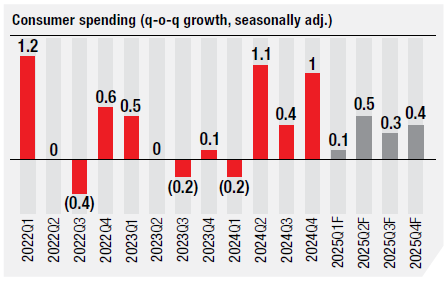
- A recent report on consumer spending for the first half of
2025 found that consumers are still spending cautiously
despite interest rate cuts, lower CPI and declining fuel prices.
Consumers continue to down trade and buy on promotion
- There also continues to be a shift towards smaller,
convenient ready-to-eat snacks or mini-meals, often
replacing traditional sit-down meals, influenced by busy
lifestyles and changing eating habits. A recent report on
the state of snacking in South Africa found that while
consumers are feeling the impact of higher food prices,
they are still setting money aside for snacks and treats
- Consumers are increasingly prioritising health and
nutrition, local consumers reportedly valuing companies
that offer healthy and nutritious choices
- Many consumers also have clear preferences rooted in
cultural identity, highlighting the value in having product
offerings that are localised to the specific market context
- Some consumers – mainly in the more affluent segment
– are demanding more sustainable products and
practices, preferring to buy from brands that are
transparent about their supply chains, use sustainable
materials and minimise environmental impact
10 World Wide Worx (July 2025) Online Retail in South Africa 2025
11 Nielsen NIQ State of Retail Nation (September 2025)
12 NIQ Market Pulse Report, September 2025
Our strategic response
- To ensure more effective penetration in a challenging market, we have strengthened our focus on consumer and customer
engagement and prioritised the execution of shopper-centric segmentation of our trade channels. Deepening our insight of
broad shopper profiles is informing our shopper activation and store execution plans, enhancing our consumer marketing
campaigns, and ensuring more targeted pricing, promotions, and price and pack architecture (here)
- We have continued to drive various initiatives to raise our online presence and become the preferred supplier to
prioritised digital commerce partners (here)
- To capitalise on emerging consumer trends, we have delivered a more streamlined two-track innovation process
that balances the benefits of "agility" with more traditional linear product development (here)
- In response to the increasing uptake of digital solutions, we are exploring select use cases on leading-edge
AI technologies that can be used as confined pilots to test capability, impact and relevance, driving automation
and best-practice adoption in functions that can provide material efficiency benefits (here)
- We are actively expanding our reach in general trade, and we have refreshed our strategy to best defend our product
offerings against the increasing threat of private label. We are continuing to pursue various initiatives to expand our
reach in general trade, reaching 101 980 general trade stores by financial year end with the goal of expanding our
presence to 150 000 stores by 2030 (here)
4
CONTINUING PRESSURE FROM SUSTAINABILITY-RELATED ISSUES
Climate change and other sustainability-related pressures are having an increasingly material impact on companies in the food sector.
- The growing visibility of social and environmental pressures has prompted strengthened regulatory measures – such as
new and/or emerging regulation on food labelling, plastic packaging, disclosure on wage disparities, and carbon and sugar
taxes – all of which has a material impact on our business
- The recent increase in the frequency and severity of extreme weather events has highlighted the impact of climate-related
risks on the availability, quality and pricing of essential raw materials, as well as on the resilience of our distribution and
supply chains
- The burden of nutrition-related disease remains a challenge within South Africa, with a 51% increase in hypertension since
2015, a 7% increase in the prevalence of diabetes, and 64% of households living below the "food poverty line" (here)
- Despite the recent increasing politicisation of ESG issues investor engagement on ESG performance and disclosure
remains strong with clear expectations for companies to report on their sustainability-related impacts, risks and
opportunities, informed by initiatives such as the GRI and ISSB sustainability disclosure standards and the
recommendations of the Taskforce on Nature-related Financial Disclosure (TNFD)
- In some market segments we are seeing growing demand for brands-with-purpose, sustainable and local products,
plant-based proteins, ethical marketing, and front-of-pack nutrition labels. Globally there is an increasing preference for
local ingredients, given these products are often perceived as healthier, and more sustainable, trustworthy and authentic
Our strategic response
Our commitment to addressing our sustainability impacts is reflected in our Sustainable Future strategy, which comprises the following three focus areas:
- Health and nutrition: We are continuing to make progress in empowering consumers to improve their health and
wellbeing, by launching food products that are more nutritious and affordable, developing best-in-class nutritional
standards, and leveraging our brand and marketing activities to promote consumer nutrition. We are investing further
in strengthening product quality and food safety through robust systems, qualified people and a strong quality and
safety culture, achieving external certification for all our manufacturing facilities (here)
- Enhanced livelihoods: We have long-standing activities in place aimed at improving the livelihoods of thousands
of people across our value chain, using our procurement practices and our investment in supplier and enterprise
development to stimulate economic opportunities, including through a specific focus on supporting black/black
women farmers and owned enterprises (here)
- Environmental stewardship: We have made further progress in reducing our environmental impact through our
investments in renewable energy, enhancing energy and water efficiency in our operations, and minimising waste,
effluent and emissions. We continue to identify innovative opportunities for circular economy interventions in areas
such as packaging and food waste, as well as leveraging our brand and marketing activities to inspire positive
behaviour change (here)