South Africa's population is one of the least
healthy globally, characterised by high levels
of obesity, lifestyle-induced non-communicable
disease (NCD) and persistent hunger and
malnutrition, exacerbated by Covid-19.
Our health and nutrition agenda is integral to our corporate
purpose of nourishing and nurturing more lives every day.
Health and nutrition has been identified as one of three key
strategic innovation growth drivers in the business. While
remaining responsive to other key market trends, we can
both grow our business and contribute meaningfully to the
achievement of our priority SDGs 2, 3 and 12.
Covid-19 has focused even more attention on health and
wellness, as well as the value of a healthy lifestyle, but the
economic fallout from the pandemic means that South Africans
are likely to have less disposable income in the coming years.
Middle and higher-income consumers will continue to shape
more of their purchasing around health concerns, but it is likely
that value purchasing behaviour will predominate across most
income groups (see IR). The opportunity for
Tiger Brands is to improve the accessibility and affordability of
its healthier products for those with lower disposable incomes
but who are nonetheless health conscious.
We are committed to enabling consumers to improve their health and wellbeing by providing affordable good nutrition.
Our key initiatives to deliver on this commitment:
Develop nutritional standards for our products that meet or exceed globally recognised nutritional guidelines
Develop more nutritious, affordable food products, including fortification of new and existing products
Leverage our brand and marketing activities to promote consumer nutrition and health awareness and inspire positive behaviour change
Play a leading role in modern food labelling practices.
Developing more nutritious, affordable products
Consumer-based innovation is a core priority for growing our
business (see IR), and we see valuable opportunities
in leading the health and nutrition agenda in South Africa and
across the continent. We are looking to realise these
commercial opportunities through our health and nutrition
strategy, and are building a strong innovation pipeline that
looks to combine health and nutrition with trends for
convenience, affordability and value.
Our health and nutrition strategy has been in play for more
than 18 months and remains highly relevant given the state
of nutrition in South Africa (see above) and the pending
labelling and marketing regulations (see below). We have
recently revised the strategy to include a stronger focus
on commercialisation, and expanded our management
framework, to drive stronger execution on this portfolio
and provide clear internal protocols for developing healthier
products (see IR).
We provide affordable nutritious products
DEVELOPING NUTRITIONAL STANDARDS FOR OUR PRODUCTS
Malnutrition affects a significant proportion of the
populations we serve. In this context, manufacturing
quality staple foods, such as bread and maize meal
for lower-income households, comes with additional
responsibility for supporting nutrition outcomes.
We monitor advances in nutrition and broader
public health issues, including through the World
Health Organisation (WHO) and South African
Department of Health (DOH), and regularly
review our nutritional standards, so that our
products meet or exceed globally recognised
guidelines.
In 2020, we refreshed the EWLW programme and
updated the EWLW nutritional standards to align with
globally recognised guidelines. These updated
standards have since been formalised through the
NICUS, and we have arranged to have these standards
reviewed through NICUS every three years. We have
introduced a three-tier approach to categorising the
nutritional value of our products: indulgent; improved-for-you; and good-for-you, and have begun to assess
our product range against the set criteria.
We have taken deliberate steps to prioritise health and nutrition
in our programme to deliver growth through innovation (see IR). Innovation processes have been synced to sales and
operations processes, and we are targeting innovations with
the greatest potential for impact. Health and nutrition impact
is a priority focus of our innovation activities, and we have
developed new product-design standards, including an
R&D health and nutrition by design framework, fortification
decision toolkit and updated EWLW nutrition criteria. We have
commenced implementation of a new PLM system, which
will help us track the design and development of products
and monitor their performance. The data captured through the
PLM will enable us to establish a 2021 baseline and set a 2030
target for nutritious products as a percentage of our portfolio.
We remain in full compliance with the latest sodium reduction
regulations and health promotion levy in South Africa. We have
implemented sodium and sugar reductions in alignment with
national regulations across the majority of our product portfolio,
including significant sugar reductions in products across
Bakery, Cereals and Beverages. While chocolate products
need fat and sugar as necessary ingredients, there are
opportunities for reductions in sodium, sugar and saturated
fats across our Culinary category. In 2021, we focused on
identifying these opportunities, with the priority on addressing
the nutritional profile of our top-selling products in this
category.
We have commenced with several health and nutrition product
renovations in 2021 and anticipate becoming more active in
this space as the front-of-pack labelling regulations in South
Africa near approval.
In 2021, we launched the following nutritious and affordable products:
In January 2021, we launched Purity Junior Smoothies to support toddler nutrition
In March 2021, we relaunched Brookes Low-Cal Fruit Squash Concentrate, which contains on average 95,6% less kilojoules than 100ml of Brookes Oros Original Orange Squash
In March 2021, we launched Ingram's Hand Sanitisers to maintain hygiene in the face of Covid-19.
Fortification of new and existing products
We fortify staple products like maize meal and certain flours
(and therefore certain breads) in alignment with SA regulations.
We fortify these staple foods with key vitamins and minerals,
including vitamins A, B1, B2, B3, B6, B9 (folic acid), iron and
zinc. Amendments to the national regulations stipulating the
amounts of these vitamins and minerals, including the
appropriate type of iron to be used, are currently pending
approval, and we are contributing to this process. We will
ensure that our affected products comply with these new
regulations once published.
We voluntarily enrich additional products across cereals,
bakeries, and baby food, including Morvite, certain Jungle
cereals, and Ace Instant, with micro-nutrients commonly
deficient in South African diets. We also develop fortified
products that target a specific nutritional health improvement,
such as Purity Junior snacking cereals and biscuits, which are
enriched with B-vitamins to assist in releasing energy, and
which have been specifically developed to provide micronutrients
that support immune function. Currently, we have
delivered micro-nutrient enrichment across >30% of our
portfolio (as measured by net sales), predominantly in our
Grains products.
In addition to the inclusion of micro-nutrients in foods, we are
continually looking for ways to improve our product recipes.
We have relaunched products in our baby portfolio where citric
acid is replaced with lemon juice concentrate, and chemically
modified maize is replaced with tapioca flour.
WE LEAD ON NUTRITION LABELLING
We are committed to playing a leading role on nutrition
labelling to make it easier for consumers to make informed
choices about our food products and their health.
Basic nutrition labelling and the declaration of certain
ingredients and allergens are regulated by South Africa's
national Department of Health, through the regulations relating
to the advertising and labelling of foodstuffs. We remain in full
compliance with these requirements. Beyond compliance,
we declare the presence of beta glucan (insoluble fibre) in our
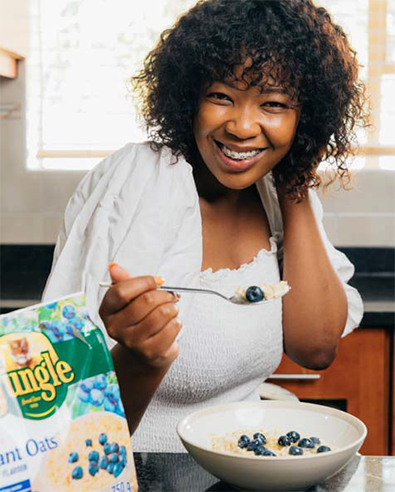
Jungle Oats, Jungle Oats Instant and Jungle Oats Bran cereals
in relation to heart-health benefits, and label the glycaemicindex
(GI) and glycaemic-load (GL) of Albany Low-GI breads in
relation to sustaining energy levels. We declare GI and GL for
all formulated products where a low GI claim is made.
Tiger Brands launched the Eat Well Live Well (EWLW) programme in 2009 to help South Africans make healthier food choices for a better life on any budget.
The EWLW brand is committed to providing consumers with easy-to-understand nutrition information, and wholesome recipes, using EWLW-endorsed products to support government's efforts of reducing the prevalence of non-communicable diseases.
Making healthy, or healthier, choices is often difficult, expensive and time consuming. Eat Well Live Well seeks to solve this tension by making consumers' journey less confusing and more empowering, so that a healthy lifestyle becomes an internalised part of their lives.
Tiger Brands was the first South African company to voluntarily make nutrition information available on the back-of-product labels. We designed and implemented the EWLW nutrition-labelling system that includes the guideline daily amount (GDA) now familiar on a number of Tiger Brands products. In FY15, we started to introduce the Be-Nutrient-Wise GDA system which appears on the front of some of our product labels. This newer logo alerts consumers to be mindful of the five key nutrients that have a proven impact on non-communicable diseases, such as heart disease, type 2 diabetes, obesity and some cancers.
The EWLW programme was refreshed and relaunched in 2020. We continue to develop and evaluate "good for you" products that carry the EWLW logo, and maintain full adherence to our EWLW nutritional profile criteria across more than half of our portfolio (when measured against net sales values). Current examples of products that meet the nutritional criteria of the programme, include: Albany: low GI variants, and 100% smooth wholegrain brown bread; KOO: Baked Beans Lite; All Gold: Tomato Sauce Light; Black Cat: no-sugar, no-salt variants; Tastic Wholegrain Brown Rice; and Jungle Oats. All the EWLW endorsed products are listed online at www.ewlw.co.za/products.
The relaunch of the programme has been followed by the release of two State of Nutrition reports in the financial year, commissioned by the EWLW Institute. The State of Nutrition Report 2020 helps build understanding of what constitutes balanced
nutrition and a healthy lifestyle. The State of Nutrition in South Africa Report 2021 (https://www.ewlw.co.za/research) highlights improvements and challenges to our national health and wellbeing in South Africa, with an emphasis on youth. Both reports make a valuable societal contribution in communicating how the foods we eat affect our health, development and functioning throughout life. The report launch events received support from the Department of Health (DOH) and Department of Forestry,
Fisheries and Environment (DFFE), and the initial announcement reached over 11 million people through traditional news media, healthy lifestyle publications, paid digital and social media.
The EWLW website provides a digital reference for healthy living, and a portal for interacting with others and accessing support from our nutritionist. The brand is active on Facebook and Instagram, and we have approximately 130 000 followers to date, at www.facebook. com/EatwellLivewellSA.
Moving into 2022, we aim to build on this year's momentum in the EWLW programme and target meaningful developments that will raise the visibility of nutritional information and the health benefits of our products.
New front-of-pack nutrition labelling regulations are forthcoming in South Africa, and we plan to fully comply with these requirements. In preparation, we have set an internal target to maintain full adherence to the on-pack nutrition labelling requirements of our EWLW and Be-Nutrient-Wise initiatives. Under the EWLW programme, we continue to re-structure label architectures and artwork across various brands to accommodate more nutrition information. We have launched back-of-pack portion-control messaging on Jelly Tots, mmmMallows and Allsorts products in our Snacks & Treats category, and are exploring the same for chocolates.
WE LEVERAGE OUR BRAND TO INSPIRE CHANGE
As Africa's biggest food company, we are aware of the power of our brand, and the significant role that our products play in the everyday nutrition, health and wellbeing of people. With many historic and well-loved household brand names in our
portfolio, we are also aware of the unique position we are in, to leverage these brands to inspire positive behaviour change among consumers. We are committed to building the integrity of our brands, prioritising the delivery of healthier product options, and to helping consumers make healthier food and product choices.
We are working in partnership with key stakeholders, including government, academia and NGOs, to leverage our brands for positive change through the EWLW programme. We are building brand-value and trust by making healthier choices easier for the consumer to make. We provide healthier food options, take a lead on national nutritional guidelines, and drive health and nutrition awareness and education through on-product activations in schools and communities.
We have begun to re-position key brands and products in relation to their flagship health and nutrition attributes. We have introduced clear and simple on-product health claims for Jungle (for heart health), Ace maizemeal (for fibre), Morvite (for
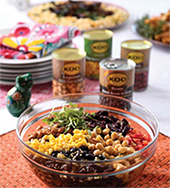
immunity) and Albany (for enhanced on-pack communication of nutritional benefits). In 2021, we introduced the KOO Colour Your Plate initiative to promote the health benefits of eating more fruit and vegetables.
We are working towards setting a 2030 target for health and nutrition marketing activations and measurement of impact. We made some progress this year, with the launch of two Eat Well Live Well State of Nutrition in South Africa reports (see below). We do not currently track the proportion of our marketing spend that goes towards the promotion of healthier products, but we are looking to track this in future. We spent a total of R3,3 million on EWLW marketing activations.
INSIGHT
GETTING SOUTH AFRICAN'S HEALTHY WITH "COLOUR YOUR PLATE WITH KOO"
KOO has launched a new TV show in partnership with SABC 2 to jumpstart their KOO 5-A-DAY Campaign, which aims to get South Africans eating more balanced and healthy meals through the inclusion of at least five servings of fruit and vegetables per day.
Colourful fruit and vegetables are not only beautiful – bringing pleasure to the experience of a meal – but informative. The colours of fruit and vegetables are indicative of the nutrients, vitamins and minerals they contain. This is the premise of the new campaign.
The new 30-minute weekly reality TV show, Colour Your Plate with KOO, covers the search to find South Africa's next cooking star, whose culinary skills inspire you to brighten your plate and balance your health. Each week the show features five amateur chefs participating in a cook-off to produce a 10-course menu featuring a hero fruit or vegetable.
The contestants' healthy and balanced meals are judged by award-winning local celebrity chef Reuben Riffel; media personality and businesswoman Basetsana Kumalo; and KOO's nutritionist Arthur Ramoroka.
This report contains forward-looking statements that, unless otherwise indicated, reflect the company’s expectations at the time of finalising the report. Actual results may differ materially from these expectations if known and unknown risks or uncertainties affect the business, or if estimates or assumptions prove inaccurate. Tiger Brands cannot guarantee that any forward-looking statement will materialise and, accordingly, readers are cautioned not to place undue reliance on these statements. The company assumes no obligation to update or revise any forward-looking statements, even if new information becomes available as a result of future events or for any other reason, save as required by legislation or
regulation.