Sustainability report: a review of Tiger Brands’ environmental, social and governance (ESG) performance

Environmental stewardshipDownload pdf version


WE REDUCE OUR ENVIRONMENTAL FOOTPRINT

Healthy ecosystems are the foundation of a secure food supply. We rely directly on this natural capital to create value through our business, and are concerned about ecological decline in the food systems where we operate and from where we source agricultural commodities.

Addressing our environmental impacts is of vital importance to protecting the ability of our business to create value over the long term. Our aim is to better meet the needs of a more environmentally aware consumer, in line with our business strategy and growth agenda. By prioritising environmental stewardship in our manufacturing and sourcing programmes, we can reduce our impact on natural systems while achieving higher operational efficiencies and lower production costs.

We are committed to significantly reducing our environmental footprint through the development and deployment of innovative technologies, practices and products.

Our key initiatives to deliver on this commitment:

  • Optimise energy consumption through integrated and environmentally friendly energy options
  • Optimise water consumption through the evaluation of water reuse opportunities and responsible effluent discharges
  • Implement circular-economy initiatives that stimulate sustainable economic opportunities
  • Providing innovative packaging solutions that minimise environmental impact
  • Developing innovative products with reduced environmental impact
  • Leveraging our brand and marketing activities to inspire positive behaviour change in consumers.
We have robust environmental policies and procedures in place, and have allocated dedicated responsibilities and lines of accountability for all our material environmental concerns. Our environmental policy framework aligns with all relevant environmental legislation and supports our compliance activities.

Our manufacturing excellence department is responsible for the operational execution of our environmental strategy and implementation of our ISO 14001 environmental management systems. All of our plants are ISO 14001 certified, and all sites that were audited by SGS and SABS this year, retained their certification.

We are exploring the redesign of our products to be more environmentally friendly. This process relies on the findings of product LCAs, which we have conducted on part of our portfolio. We have identified solutions for our brands, and these are still under evaluation. LCAs are currently very expensive, and we are engaging with the University of Cape Town (UCT) and the CSIR in regards to the more cost-effective LCA tools they are developing.

Training is a key part of our drive to continually improve, and in 2021 we continued building the environmental capabilities of our team. Eight employees successfully completed a comprehensive resource-efficiency training programme. The members of our team that have undertaken training to become energy management system experts all passed their exams. We also ran e-learning programmes for facilities management, carbon footprint analysis, water and energy efficiency.

We optimise our energy use and reduce our emissions

It is clear that the impacts of climate change pose significant risks to business and society. Urgent action is required from companies to take a lead in societal mitigation efforts, and adapt business models and operations for resilience in a low-carbon economy.

We are committed to optimising our energy use and reducing our GHG emissions through more efficient systems and technologies, as well as the prioritisation of renewable energy where possible.

Our key energy-efficiency installations this year included: Germiston bakeries: New air compressor installed, conversion of polyfuel to gas (oven heating); Roodekop beverages: power factor correction at substations; Culinary Boksburg: 5% improvement of condensate return (boiler efficiency); and Snacks & Treats (Jacobs): new energy-efficient chiller installed. We have also made light-emitting diode (LED) lighting substitutions at various sites across the group.

We continue to optimise our supply chain (see IR) and are engaging with our suppliers to improve energy-efficiency and reduce GHG emissions. We have completed life cycle analyses (LCA), including product carbon footprint, across part of our portfolio and continue to expand on this. We are currently working with our logistics partners to reduce energy use and emissions through improved route planning. We are also investigating energy and emissions reduction opportunities in our distribution centres, including through LED lighting and renewable energy installations.

In 2019, we set targets to achieve a 10% decrease in energy intensity and a 25% reduction in GHG emissions by the year 2030 (from a 2019 baseline). We are also exploring the development of circular energy-generation initiatives that make use of renewable energy and our by-products. We have set a target to source 20% of our energy from renewable sources by 2030. This target is aligned with our targets to reduce energy intensity and emissions. The following facilities have been identified as pilot sites for our independent power purchase agreement (PPA) initiative: HPCB, Beverages, King Foods and Hennenman for 2022. This will also include solar installations at these units.

In 2021, we recorded reductions in absolute energy consumption (kWh), energy intensity (kWh/tonne), and absolute water consumption (kℓ). The disruption of our operations due to Covid-19 has contributed to these reductions, but our performance nonetheless highlights the positive impact of our resource efficiency cleaner production (RECP), energy management, water efficiency, and zero waste-to-landfill programmes. Progress on some of our key initiatives has been negatively affected by Covid-19.

Our 2021 carbon emissions:

GHG emissions (tCO2e) 2021   2020
Scope 1 (direct) 210 042   350 143
Scope 2 (indirect) 231 140   280 633
Total scope 1 and 2 emissions 441 182   630 775
Total GHG emissions 441 182   630 775

In 2021, we recorded an absolute energy reduction of 20,4% from the previous year, and a 2,7% decrease in energy intensity (kWh/tonne). We recorded a 30% reduction in our absolute direct carbon emissions and a 14,5% reduction in GHG emissions intensity (CO2/tonne) from the previous year. This significant reduction in direct carbon emissions was driven primarily driven by reduced production.

Our emissions calculations include both stationary and mobile combustion (emissions from owned vehicles), and our figures have been externally verified by Catalyst. The sites which contributed the most to our absolute emissions in 2021, include Culinary Boksburg, Snacks & Treats and LAF (our Deciduous Fruit business). Emissions are relatively high at these sites, due to energy intensive production processes that depend on the operation of large boilers (in excess of 10MW).

Having completed our maiden carbon tax submission in 2020, we are currently in the process of quantifying our carbon budgets up until the year 2025. Our intention is to maintain the current year-on-year trend of decreasing our GHG emissions to reduce our climate change impact and lower our carbon tax liability.

ALIGNING WITH THE TASK FORCE FOR CLIMATE-RELATED FINANCIAL DISCLOSURES (TCFD)

We are taking initial steps to improve our climate change disclosure in accordance with the recommendations of the TCFD. In 2018, we stopped participating in the CDP Climate Change and Water programmes. At a time when the demands of multiple sustainability reporting frameworks and standards place an excessive burden on companies, we are looking to concentrate our efforts on the mechanism which we believe has the most business relevance and will help us gain the most ground. We are working to become more familiar with the TCFD recommendations and engaging internally to build traction on taking this forward. We have included a preliminary TCFD index in this report (see adminstration below), to support our continual improvement in this process.

WE OPTIMISE OUR WATER CONSUMPTION

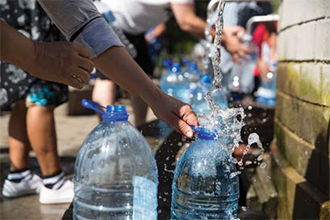
Water scarcity is ubiquitous where we operate in South Africa. Approximately 74% of our facilities are located in water-stressed catchments in the country. Climate change is projected to increase water stress in many South African catchments that are of key importance to food production.

We recently experienced a severe water crisis in South Africa, where day zero scenarios were faced by many cities and towns across the country. This experience has sensitised us to the importance of water resilience for our operations, and we are actively working to identify and implement initiatives to reduce the water footprint of our operations, and reduce the potential impact of water risk across the business.

We are committed to optimising our water consumption through the evaluation of water reuse opportunities and responsible effluent discharges. In 2019, we set a target to achieve a 10% reduction in water-use intensity annually year on year, and have been implementing initiatives to meet or exceed this benchmark.

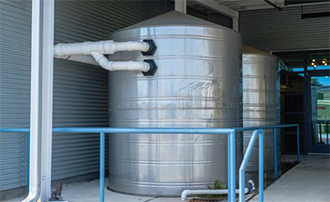
Our key water-efficiency initiatives this year included: Culinary Boksburg: improvement of condensate return by 5%; Snacks & Treats (Candy): installation of three dry vacuum systems in boiling area; HPC: recycling of treated effluent water to be used in ablutions around site; Baby: nutrition recycling of final washer water to be used for cleaning at waste area; and LAF: segregation of freshwater dam to prevent effluent seepage. The implementation of additional smart-metering for water and steam have been deferred to 2022.

We conducted an additional water overview assessment at one of our larger operations this year, Boksburg Culinary. We have more detailed assessments planned for this facility in 2022, including for other facilities that are located in water-stressed catchments and considered high water risk. We are also exploring water reuse opportunities and initiatives to improve our practice on responsible effluent discharges.

Our 2021 water consumption

  2021   2020
Total water consumption (kℓ) 3 271 342   3 791 666

In 2021, we recorded an absolute water-use reduction of 13% from the previous year, largely driven by lower levels of production. Disappointingly, our water-use intensity (kℓ/tonne) increased by 5,5% over the period. We will be looking to improve upon this next year through implementing a shorter interval for monitoring and reporting on water-use at our sites.

WE MINIMISE WASTE THROUGH CIRCULAR ECONOMY

We continue to explore opportunities to design and implement inclusive circular economy initiatives. An inclusive and circular approach to designing sustainability initiatives offers the potential to expand societal impact, gain production and resource efficiencies, and harness new business opportunities.

Our current focus is on waste minimisation, and we see this as a springboard for future initiatives that may capture waste-streams and by-products as inputs for innovative new processes or products. Our key initiatives focus on reducing waste to landfill, recycling packaging material, reducing food waste and loss, and diverting food waste and loss towards new value creation opportunities. We take an inclusive approach to these initiatives, looking to create jobs and support micro-enterprises through the process.

In 2019, we conducted waste-stream mapping and waste-reduction assessments across a number of our operations, as part of our participation in the RECP programme. Through this process, we have identified the major waste and effluent streams arising from our production processes, and quantified the base volumes and current costs incurred for different waste streams.

To build on this baseline research, we have been working through the CGCSA to establish a coherent waste reduction programme and set waste reduction targets for our operations. We have committed to the SA Plastics Pact (see below) and have been working together with industry partners to set-up a voluntary industry food-waste reduction framework for South Africa. This work is in progress, with a baseline for the programme to be set in 2022.

A consistent part of our food-waste minimisation strategy is to make regular donations of near-expiry food to vulnerable communities. Since 2020, we have increased these donations in partnership with Food Forward SA, as part of our community response to Covid-19 (see here). We are a core signatory to the CGCSA Food Loss and Waste Voluntary Agreement. Through our participation in this initiative, we are developing a more coherent food waste and loss programme, including clear actions and targets. As a signatory, we have committed to halve our food loss and waste by 2030, in alignment with SDG 12.3. We are implementing measures across our sites to map our waste streams in order to identify further opportunities for addressing food waste.

Food Loss and Waste – Consumer Goods Council of South Africa (CGCSA) https://www.cgcsa.co.za/serviceoffering/food-safety-initiative/food-loss-and-waste/.

Our waste intensity remained relatively low at 0,09t/t for FY21, with a slight increase from 0,02t/t in 2020.

WE INNOVATE PACKAGING SOLUTIONS

Plastic packaging plays a vital role in delivering our products to consumers in a manner that preserves the integrity of the product, promotes convenience, and safeguards health, yet the waste generated from plastic packaging has serious negative implications for marine ecosystems, wildlife, climate change, and the quality of air, water and soil. Reducing packaging offers the dual benefit of lower materials costs and improved environmental performance.

We are committed to achieving the targets outlined in the SA Plastics Pact and have made progress in recent years, and during 2021, towards achieving our 2025 targets. Our position on plastics is available at: www.tigerbrands.com/sustainability/ethicsgovernance.

https://www.saplasticspact.org.za/roadmap-to-2025/

2025 TARGETS


Take action on plastic packaging through redesign, innovation or alternative (reuse) delivery models


100% of plastic packaging to be reusable, recyclable or compostable


70% of plastic packaging effectively recycled

  30% average recycled content across all plastic packaging.

We continue to improve the efficiency and sustainability of our packaging management practices. We reduce, reuse, recycle and prioritise a circular-economy strategy in the design, development, and renovation of our product packaging. We have eliminated unnecessary packaging, optimised light-weighting, specified packaging made with recycled materials, and will soon be introducing alternative packaging solutions for some of our most popular brands.

INSIGHT

OUR KEY ACTIVITIES TO DATE

    • We are identifying innovation opportunities: We completed a baseline-assessment of our packaging footprint (representing 80% of our volumes) and have identified non-recyclable items across all our categories. We followed this with a packaging sustainability gap-analysis to identify various packaging improvement opportunities. Based on this analysis, we will soon be introducing new packaging solutions across our most popular brands
    • We have optimised light-weighting: Most of our packaging across all our categories is at optimum weight or thickness
    • We are reducing primary, secondary and tertiary packaging: We have removed flat-boards as secondary packaging on new product lines, and all new products are now packed directly onto a pallet using a thinner but stronger shrink wrap. We will be extending these initiatives to the rest of our product range, and ultimately, we will eliminate the use of shrink wrapping with the introduction of automated palletisation
    • We specify the use of recycled plastics where possible: We have migrated the majority of our Beverages and HPC products to reusable and recyclable plastic packaging. Our beverage bottles now use 50% recycled PET (rPET), and we plan to increase this further in future. A key challenge is the limited availability of affordable high-quality recycled materials in South Africa. We are working with various stakeholders within the plastic recycling value chain to find opportunities to address this
    • We are replacing non-recyclable with recyclable: We are working with current suppliers to develop recyclable monolayer solutions for flexible plastic materials, and our first initiative will be the replacement of our two-kilogram Woolworths and Tastic rice packs with recyclable monolayer alternatives. The development of flexible and recyclable plastics still remains a global challenge for industry
    • We are testing biodegradable and compostable packaging materials: We continue to test a material made from sugarcane, for inclusion in all our highdensity polyethylene (HDPE) closures and bottles. We are exploring the scalability of compostable materials in South Africa, but face challenges regarding costs and infrastructure. Solutions will require collaboration and collective impact
    • We are assessing reuse models: We are exploring reuse models that include product-refills and digitalordering solutions, yet solutions will require collaboration and collective impact. In total, 90% of the packaging in our Beverage and HPC businesses is reusable. An appropriate solution has not yet been identified
    • We are piloting anti-microbial technology: We are exploring the possibility to extend the shelf-life of our bread products by incorporating anti-microbial additives into plastic bread bags, and thereby reduce food waste and loss. An appropriate solution has not yet been identified.

On 5 November 2021, extended producer responsibilities (EPR) regulations came into effect in South Africa. We have been monitoring the development of this legislation, and are in compliance with the initial requirements. We are also well positioned to participate in the extensive discussions planned among producer responsibility organisations for each packaging format, and to comply with forthcoming requirements relating to on-pack recycling logos, use of recycled content and design for recycling. Packaging SA has developed a "design for recycling" guideline which is aligned to the EPR regulations, and we have shared this with our technologists. Tiger Brands have met the 5 November 2021 government compliance date for EPR. We are part of all the required Producer Responsibility Organisations (PROs) for all the packaging formats. We have registered with Department of Forest, Fisheries and Environment (DFFE) and have obtained an EPR registration number.

WE LEVERAGE OUR BRAND TO INSPIRE CHANGE

Influential brands are able to support positive shifts in consumer behaviour, and have a critical role to play in addressing plastics pollution and in deepening consumer awareness of the environmental impacts and opportunities of their purchases.

Plastic should not be landfilled nor littered. It is a valuable and potentially renewable resource, with a history of negative environmental implications that lend urgency to our innovation of new packaging solutions. In South Africa, where there is a viable market for plastics recycling, we are reviewing how we can most effectively use our brand, marketing, and labelling to encourage widespread recycling.

In 2020, we approved a policy for the on-pack communication of a product's environmental footprint, and have established a standard practice for the on-pack labelling of a product's recyclability. This approach is easy-to-understand and clearly informs consumers on what is recyclable and what is not. We continue with the implementation of this practice for all new products and existing products under renovation.


ADMINISTRATION Expand

TIGER BRANDS LIMITED
Incorporated in the Republic of South Africa
Share code: TBS
ISIN: ZAE000071080
Registration number: 1944/017881/06

COMPANY SECRETARY
JK Monaisa

REGISTERED OFFICE
3010 William Nicol Drive
Bryanston
Sandton

POSTAL ADDRESS
PO Box 78056, Sandton, 2146
Telephone: +27 11 840 4000

AUDITORS
Ernst & Young Inc.

PRINCIPAL BANKER
Rand Merchant Bank

SPONSOR
JP Morgan Equities South Africa Proprietary Limited

SOUTH AFRICAN SHARE TRANSFER SECRETARIES
Computershare Investor Services Proprietary Limited
Rosebank Towers, 15 Biermann Avenue
Rosebank, 2196
Private Bag X9000, Saxonwold, 2132

AMERICAN DEPOSITORY RECEIPT (ADR) FACILITY
ADR Administrator
The Bank of New York Mellon

INVESTOR RELATIONS
Nikki Catrakilis-Wagner
Erene Kairuz
Telephone: +27 11 840 4000

SUSTAINABILITY
Stiaan Wandrag
stiaan.wandrag@tigerbrands.com

WEBSITE ADDRESS
www.tigerbrands.com

CONTACT DETAILS
Companysecretary@tigerbrands.com
Investorrelations@tigerbrands.com
Consumer helpline: 0860 005342


FORWARD-LOOKING INFORMATION

This report contains forward-looking statements that, unless otherwise indicated, reflect the company’s expectations at the time of finalising the report. Actual results may differ materially from these expectations if known and unknown risks or uncertainties affect the business, or if estimates or assumptions prove inaccurate. Tiger Brands cannot guarantee that any forward-looking statement will materialise and, accordingly, readers are cautioned not to place undue reliance on these statements. The company assumes no obligation to update or revise any forward-looking statements, even if new information becomes available as a result of future events or for any other reason, save as required by legislation or regulation.