South Africa is one of the most unequal
countries in the world, with extremely high
levels of unemployment and poverty, and a
persistently underperforming economy where
households are under significant pressure. The
economic impact of Covid-19 has exacerbated
this situation, and amplified the need for
inclusive economic empowerment, economic
and social redress.
We depend on a strong economy and healthy consumer
demand to drive sales of our premium branded products.
By driving economic inclusion and empowerment through our
supplier network and procurement practices, and through
investing in community development, we can grow our
business through driving social and economic transformation.
We are committed to improving the livelihoods
of thousands of people by providing
opportunities across our value chain for
inclusive economic participation.
Our key initiatives to deliver on this commitment:
Support new black/black women-owned enterprises and
create sustainable livelihood opportunities by 2030
By 2030, at least 50% of our total local procurement spend
will be towards black/black-women owned suppliers
(restricted by global multinational supplier exclusions)
Annually contribute at least 1,5% of net profit after tax
towards socio-economic development activities that
promote sustainable thriving communities
To attract, source and develop a skilled and diverse
workforce, create an inclusive and collaborative work
environment where our people can thrive, grow and
innovate.
We drive Enterprise and Supplier Development (ESD)
We focus significantly on economic transformation in South Africa through the transformation of our own supply chain. In 2021, we procured close to 1,3 million tonnes of grain, of which 57% was procured locally. We procured 310 000 tonnes of fruit and vegetables, of which 90% was procured locally. Currently, 10% of our locally-procured fruit and vegetables are from verified BBBEE suppliers, with grains remaining more of a challenge at less than 1% procured through BBBEE suppliers. We are working to improve our performance in this regard through our Enterprise and Supplier Development (ESD) and preferential procurement programmes.
Our ESD programme focuses on developing the operational and financial capacity of black/black-women owned enterprises to become part of our value chain. We have made good progress on implementing our five-year ESD strategy, which has enabled us to successfully develop the enterprises of black farmers, suppliers and distributors, and integrate them into the heart of our supply chain.
We partner with black/black women-owned farming enterprises through our smallholder farmer and agriculture aggregator programmes, and actively support their inclusion in our supply chain. We aggregate small farmers into collectives to help them reach scale, and provide incubation, financing, business development, and technical support to help them meet our supplier requirements.
Our Dipuno ESD Fund is the primary mechanism through which we finance and provide liquidity to black/black women-owned small enterprises, as well as post-investment, non-financial support to build knowledge, skills, capacity and quality. In 2021, we further capitalised the ESD fund with R20 million on top of the R65 million cumulatively invested since 2019. This brings the total capital investment to R85 million, and sets us on-course to achieve our milestone target of an ESD fund of R100 million by 2025. To date, the Dipuno Fund has approved ESD projects to the value of R28,6 million for agriculture initiatives, with a further R10 million set-aside for a stock credit guarantee that supports black-owned food distributors to buy stock from Tiger Brands.
Our key achievement was the successful onboarding of two black female-owned aggregators, which supply Tiger Brands with groundnuts and small white beans. The inclusion of these two new aggregators in our supply chain has expanded the farmer-support we provide through the aggregator programme to include 157 farmers, and expanded our job-creation impact to over 834 jobs in the small farmer sector.
2021 ESD AWARDS
We were pleased once again to receive a number of
ESD related awards in 2021.
In the listed company category at the annual
Gender Mainstreaming Awards held on 9
September 2021, Tiger Brands received the
following honours:
✓
Southern Africa Gender Mainstreaming Champion:
This award recognises the contribution we have
made towards creating sustainable income-generating
opportunities for women and rural
communities
✓
Empowerment of Women in the Community
Award: This award recognises the contribution we
have made to women empowerment, through the
requirement that 40% of participant enterprises in
our smallholder and aggregator programmes have
to be 100% black female-owned
✓
Economic Empowerment Award: This award
recognises the contribution we have made to black
economic empowerment through the business
development support and capacity building we
provide to black entrepreneurs through our
agricultural aggregator programme.
In the fourth annual Absa Business Day Supplier
Development Awards, in partnership with Arena
Holdings, Fetola and Cold Press Media, Tiger
Brands was announced the winner in the
Collaboration Award sponsored by Fetola, and
overall winner of the Supplier Development Award,
sponsored by Absa.
2021 procurement highlights:
TOTAL SPEND WITH BBBEE-VERIFIED SUPPLIERS
R13,5 billion
(2020: R12,3 billion)
SUPPLIERS THAT QUALIFY AS BLACK-OWNED
R5,6 billion
(2020: R3,7 billion)
SUPPLIERS THAT QUALIFY AS BLACK WOMEN-OWNED
R4,3 billion
(2020: R3,4 billion)
SUPPLIERS THAT QUALIFY AS SMALL ENTERPRISES
OR EXEMPT MICRO-ENTERPRISES
R1,4 billion
(2020: R1,6 billion)
WE PRACTICE PREFERENTIAL PROCUREMENT
Tiger Brands is committed to supporting black economic
empowerment and prioritises procurement awards in South
Africa to suitably qualified suppliers in line with the Broad-Based Black Economic Empowerment Act, No 53 of 2013
(BBBEE Act). Approved BBBEE suppliers will be given
preference among competing bidders where all other selection
criteria are met. Tiger Brands reserves the right to restrict any
business with suppliers suspected of BBBEE fronting.
This inclusive approach also ensures our requirements for the
best-value package are met, comprising best price, quality,
service and delivery performance. Our procurement team has
rationalised these strategies to deliver value to Tiger Brands
and meet transformation obligations. This includes ensuring
that suppliers improve their BBBEE credentials.
In 2021, we achieved our annual target to reach a cumulative
preferential procurement spend of R1 billion. We reached an
accumulated spend of R1,089 billion in 2021, an increase of
R273 million from a total of R816 million in 2020. Since 2020,
we have had import-replacement plans in place to drive implementation of our BBBEE procurement policy. In 2021, we
slightly increased our local procurement from BBBEE-verified
suppliers across groundnuts (900 tonnes), small white beans
(1 000 tonnes), and wheat (2 466 tonnes), procuring a total of
4 366 tonnes compared to a total of 4 236 tonnes in 2020.
A challenge we face is that transformation in the ingredients
and agricultural categories is slow due to the high levels of
capital, skills, inputs and land required to establish a
sustainable supply. The volumes that Tiger Brands sources
and our rigorous compliance requirements also make it difficult
for individual smallholder farmers to compete. We are
advancing our ESD programme and amplifying our investment
commitments so that we can address these challenges and
achieve our ambitions for black economic empowerment. We
are actively engaging with external stakeholders and suppliers
to facilitate and encourage transformation, and intentionally
identify suitable BBBEE candidates for participation in our
ESD programmes (see above).
BBBEE
Our BBBEE scorecard as at December 2020, as verified by
EmpowerLogic, is in the table below. We disclose our 2020
scorecard, as the 2021 results will only be available after the
publication of this report. Our BBBEE score at present is level
3, an improvement from level 4 in 2019, against the amended
agriculture sector (agri-BBBEE) codes gazetted in December
2017. Our updated group transformation strategy has enabled
this improvement, and will continue to drive further progress,
as we maintain a focus on integrating and executing all
elements of the BBBEE scorecard. The 2021 scorecard will be
posted at www.tigerbrands.com when available.
Tiger Brands’ BBBEE scorecard 2020
Available
points
2020
2020
Ownership
25
20,9
Management control
19
13,22
Skills development
25
9,6
Enterprise and supplier development
44
33,91
Socio-economic development
15
15
Total
128
92,63
Level
Level 3
BBBEE ownership 2020
% held
by black
people
Thusani Trusts (beneficiaries are children of black employees)
1,89%
Tiger Brands Black Managers Trust
0,58%
Tiger Brands Foundation Special Purpose Vehicle (SPV)
4,80%
Tiger Brands General Staff Share Trust
0,07%
Mandated investments
7,90%
Total
15,23%
WE INVEST IN SUSTAINABLE COMMUNITIES
The BBBEE codes for the agri-sector stipulate that companies
spend 1,5% of net profit after tax (NPAT) on SED that facilitates
sustainable economic inclusion, with a requirement for at least
75% of black beneficiaries. Tiger Brands fully aligns with these
national requirements, spending 1,5% of NPAT through our
SED activities. In 2021, we spent a total of R22,9 million on
SED, compared to R22,4 million in 2020.
Our SED strategy resonates strongly with our purpose and
aligns closely with our business and sustainable future
strategies. We are fully committed to using our resources
to promote food security. Many of the communities in which
we operate face significant health and nutritional challenges,
which have been exacerbated by Covid-19. Given our scale
and the nature of our business, working to improve food
security makes sense for our business.
Building on past experience and looking to be more responsive
to the real and changing issues impacting communities in
South Africa, our SED strategy focuses on longer-term
socio-economic impact in the communities surrounding our
sites. Our focus is on local economic development, community
food and nutrition, and capacity building. The aim is to support
long-term food resilience in the communities around our sites,
through projects that have a stronger focus on empowerment
and make a more meaningful contribution to our priority SDGs
2, 3, 8 and 10.
In response to the impacts of Covid-19, we expanded
our SED strategy in 2021 to include a focus on supporting
soup kitchens and feeding schemes, particularly in
communities where we experience market access challenges.
Through a partnership with SA Harvest, we make monthly food
donations to feeding schemes, early childhood development
(ECD) centres and vulnerable communities across the country.
To monitor the impact of our SED activities, we host annual
workshops with all our non-profit organisation (NPO) partners
to share and discuss challenges, insights, and ideas for
improvement. In 2020, we commissioned a social return
on investment (SROI) study, to track and measure the impact
of some of our key SED activities across food and nutrition,
community-based enterprise development and community
skills development. The results of the 2020 analysis indicated
that our programme delivers a SROI of 4,65:1. This means that
for every R1,00 we invested, we created R4,65 of social value.
The food hampers we distribute to university students through
the Plates4Days programme yielded the highest return on
investment.
Plates4Days targets the most vulnerable students. The food
support we provide to these students directly translates to
the completion of their studies, their entrance into the
workforce, and their ability to generate an income. We plan
to build on the insights of this SROI study, and continue to
monitor and measure the impact of our SED activities
going forward.
Some of the greatest challenges facing black
smallholder farmers include access to funding,
infrastructure, technology, and business networks.
Tiger Brands is transforming its supply chain and
supporting inclusive growth by developing and
supporting nascent black and female-owned small,
medium and micro-enterprises (SMMEs) within the
agriculture sector, as part of its ESD programme.
Lusanda Moletsane is the owner of Khumo Ea Tsabo
(KET), an agricultural company that was recently
onboarded to Tiger Brands’ agriculture aggregator
programme. Through the programme, Lusanda has
accessed R10,5 million in financial support, including
funding for technical support and a low-interest loan,
to further develop her enterprise to meet the scale
and quality required of a Tiger Brands supplier.
With technical support from Nic Basson, an agronomist
adviser and mentor working with the farmer support
programme, Lusanda has been able to improve yields
and quality, and build an agricultural business model
that really works. Lusanda has aggregated ten
smallholder farmers – four of whom are black women
– on 10 000 hectares across two farming clusters in
Nigel and Bronkhorstspruit. Through the collective
working of two farm clusters in Nigel and
Bronkhorstspruit, Lusanda’s business will supply
Tiger Brands with two tonnes per hectare of small
white beans.
“My motivation is to help others build sustainable
businesses and join the mainstream economy within
the agricultural sector. I have seen the struggle to
commercialise land that has been transferred to
previously disadvantaged South Africans. I want to help
these farmers run lucrative farms that generate enough
money to cover their operating expenses and become
profitable businesses that will grow in the future.”
– Lusanda Moletsane.
When civil unrest and looting broke out across KwaZulu-Natal and parts of Gauteng in July 2021, many people and households
were left unable to buy bread, rice, and other daily essentials, with vulnerable communities most heavily impacted. Working with
NGO partners such as SA Harvest, Food Forward, and Gift of the Givers, the Foundation provided additional food relief to
communities, including remote rural areas, to the value of R3 million. Our disaster relief efforts aim to respond rapidly in crisis
situations where urgent intervention to secure food supply is needed.
To build, nourish and nurture sustainable, food secure and healthy communities
OUR FOCUS AREAS
Providing nutritious food to thousands of beneficiaries across
South Africa is a significant responsibility and requires strong
relationships with external stakeholders. We have built strong
partnerships with various local NPOs to address food security
in our host communities.
THROUGH THESE PARTNERSHIPS, WE HAVE:
Established the family food programme, which
provides food to approximately 30 000 people every
month and supports other South Africans in need on
a weekly basis with food donations in partnership
with organisations such as Food Forward, SA
Harvest and Gift of the Givers.
Established the Plates4days programme, which
currently provides monthly food hampers to 5 200
university students at seven universities, across nine
campuses. In 2021, we welcomed the University of
Pretoria as a new participating institution.
Adapted the above programmes to continue, and
where possible extend, our community food support
during the Covid-19-related national lockdown.
Provided disaster food relief during the recent civil
unrest in South Africa to the value of R3 million.
WE DEVELOP COMMUNITY SKILLS
Our SED strategy is guiding us away from traditional
philanthropy towards a more sustainable approach to
community-investment, which prioritises community
empowerment through development partnerships. In
accordance with our strategy, a key focus of our investment
activities is to support capacity building at our partner
organisations so that these organisations can become
self-reliant over the longer term.
We have begun to introduce a range of interconnected
programmes aimed at developing the capacity of our partners.
This initiative is being driven through our NPO accelerator
programme which supports NPOs with business development
and management skills. We have commissioned Zevoli Growth
Partners to assess the organisational development needs and
opportunities for all our current food and nutrition partners,
and to assist these organisations in developing growth plans.
These growth plans will guide our investment activities in these
organisations to ensure their continued community impact.
WE DEVELOP COMMUNITY ENTERPRISES
The core focus of our community enterprise development
activities is the establishment of community food gardens
and related micro-enterprises. We see community and
home food gardens as vital assets in building food-resilient
communities, and as an essential aide to our family food
programme. We work with partner organisations to design
and build sustainable food-growing initiatives and micro-enterprises.
We complement these opportunities with training
workshops on organic farming and gardening practices, and
provide material support to modernise and enhance the
productivity of existing community food gardens.
INSIGHT
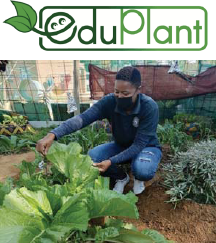
THE EDUPLANT SCHOOL GARDENING AND NUTRITION PROGRAMME
Tiger Brands is the principal partner of the EduPlant School Gardening and
Nutrition Programme implemented by Food & Trees for Africa (FTFA). EduPlant is
one of South Africa’s longest-running and most successful school greening and
gardening programmes, and is endorsed by the Department of Basic Education,
through their National School Nutrition Programme (NSNP). EduPlant’s mission
is to drive food security impact through gardening and nutrition education and
practice. The programme achieves this by integrating gardening and nutrition
learning into the national curriculum, and using student food gardens to
supplement national school feeding schemes. The programme focuses on
schools, learners, and their surrounding communities, and progressively builds
school-linked food-security clusters in under-resourced communities and
townships. An external evaluation of the programme found that 60% of learners
and community members involved in EduPlant workshops, implement the
practices learnt at home.
INSIGHT
PROMOTING NUTRITION
THROUGH THE TIGER
BRANDS FOUNDATION
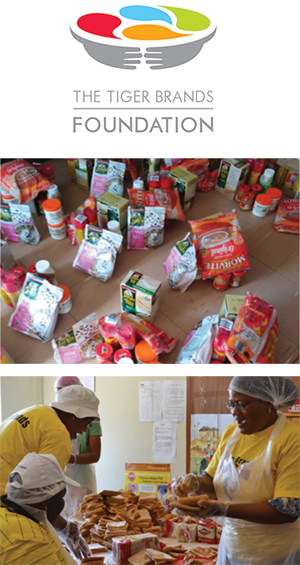
The Tiger Brands Foundation was established to enhance our social impact.
The social investment activities of the Foundation run in addition to Tiger
Brands’ SED activities, and is managed by an independent board of
trustees. The Foundation provides an in-school breakfast programme to
non-fee paying primary and secondary schools.
RESPONDING TO COVID-19
Like much of the global community, the Foundation and
our beneficiaries have been impacted by the Covid-19
pandemic. Covid-19 has amplified the existing food security
crisis that is deeply felt in poor communities across South
Africa. Unfortunately, some of our programmes and projects
have had to be suspended in compliance with national
lockdown restrictions, but we have worked hard to adapt
and extend our programmes where possible, to ensure that
we continue advancing our community food support.
THE TIGER BRANDS BREAKFAST PROGRAMME
The Tiger Brands breakfast programme provides the
essential breakfast meal to 79 640 learners each day at 105
schools across all provinces in South Africa. The programme
has served a cumulative total of 99 million breakfasts since
2011 (2020: 87 million). In 2021, we served 12 million
breakfasts and added four new schools to the programme.
The Foundation donates kitchens to schools to ensure that
food is prepared in a hygienic environment, facilitating the
construction of new kitchens and refurbishing kitchens that
are rundown. In 2021, we donated one new kitchen in the
Eastern Cape and two kitchen refurbishments at schools in
Mpumalanga. Additionally, we facilitated the construction of
one new kitchen and two kitchen refurbishments at schools
in the Northern Cape, funded by one of our partner
organisations. The total value of our donations was
R1 million, with partner funding amounting to R900 000.
THE NATIONAL SCHOOL NUTRITION
PROGRAMME (NSNP)
In response to Covid-19, we have expanded our contribution
to the NSNP with the Department of Basic Education
(DBE), to provide meals to learners in communities where
these would previously have been facilitated through
schools directly.
In 2021, we distributed 59 934 food hampers to families
of vulnerable learners. The hampers included starch-rich
foods (maize meal and rice), protein-sourced foods
(soya, tins of baked beans, tins of fish and peanut
butter), cooking oil, tea bags, sugar, salt and four
non-food items (dishwashing liquid, all-purpose cleaner,
sanitiser, and laundry washing soap). The one new
kitchen donated to a school in the Eastern Cape as part
of a public-private partnership between the Foundation
and the DBE, won top honours at the DBE’s National
School Nutrition Programme (NSNP) Awards.
BACK TO SCHOOL CAMPAIGN
In 2021, the Foundation ran a back to school campaign to
celebrate the ease of lockdown measures, while assisting
the schools to keep learners safe from Covid-19 infection.
We had found that many families struggled to procure
good high-quality reusable and washable masks. We
procured 90 000 branded and washable masks, in two
sizes: medium (for children) and large (for adults). Large
masks were distributed to learners in high schools, and
adult staff members in both primary and high schools.
Medium masks were distributed to learners in primary
schools.
Looking ahead
Due to the new streams of distribution required to adapt
to the implications of the pandemic, the Foundation has
been able to establish a much stronger network of
partners (local NGOs, SAPS, Departments of Social
Development and Health, churches, etc.) within the
various communities in which we work. And because
new beneficiary registers were collated, and
Covid-19
protocols had to be strictly followed, the Foundation has
developed a new standard operating procedure (SOP)
for food hamper distribution. These new relationships
and the new SOP were formalised and will assist
in strengthening the Foundation’s work in these
communities in future.
The Covid-19 pandemic has completely rewritten the
economic and social context of our country, and indeed
the world. We need to adapt our programmes, and
understanding these contextual patterns of change
will help us identify our strategic priorities going forward.
Towards this, we have already started consultations
with various strategic partners and stakeholders in the
formulation of the Foundation’s next strategic plan.
INSIGHT
Priority SDGs
The Tiger Brands Jam Unit in Paarl produces all
the jams for the group, as well as various other
condiments. Historically, waste generated was
mostly sent to landfill sites due to improper
segregation, particularly from primary and
secondary packing. The recycling rate for the
site was as low as 23% in FY19. The site had to
improve this performance to align with the Tiger
Brands’ strategy in terms of circular economy
waste initiatives, and the commitment to reduce
food loss and waste by 50% by 2030 (SDG 12.3).
Firstly, proper identification of all waste streams
from the operational areas was completed and
appropriate infrastructure resources were
allocated. This ensured the waste streams were
collected separately which resulted in zero
contamination of waste streams.
Secondly, the site collaborated with external
stakeholders to find beneficial offsets for the
identified waste streams. Waste management
companies were crucial in this partnership as
the site required beneficial offsets rather than
landfilling as a convenient way to discard waste.
As a result of these actions, the site managed a
recycling rate (waste for beneficial use) of 83%
for FY21. This would not have been possible
without partnering with external businesses in
the community immediate to the site.
Financial benefits of recycling are becoming
more significant and makes good business
sense. This is improved further due to the cost
reductions associated with diverting waste from
landfills to other industries where they can be
valuably utilised.
CGCSA on 29 September 2021 launched the
South African Food Loss and Waste Voluntary
Agreement. The agreement is led by the
CGCSA, in partnership with the DFFE and the
Department of Trade, Industry and Competition.
It commits food manufacturers and retailers to
reducing food waste to achieve UN SDG 12.3
goal to halve per capita global food waste by
2030 at the manufacturing and retail levels and
reduce food losses along production and supply
chains, including post-harvest losses. Tiger
Brands is a founding signatory of the Food Loss
and Waste voluntary agreement.
This report contains forward-looking statements that, unless otherwise indicated, reflect the company’s expectations at the time of finalising the report. Actual results may differ materially from these expectations if known and unknown risks or uncertainties affect the business, or if estimates or assumptions prove inaccurate. Tiger Brands cannot guarantee that any forward-looking statement will materialise and, accordingly, readers are cautioned not to place undue reliance on these statements. The company assumes no obligation to update or revise any forward-looking statements, even if new information becomes available as a result of future events or for any other reason, save as required by legislation or
regulation.